 how-to
Tallow Skincare for Pet Skin Irritation: A 2026 Guide
Table of Contents
- What Is Beef Tallow and Why Does It Work on Pet Skin?
- Benefits of Tallow Balm for Animal Skin
- Is Tallow Lick-Safe for Dogs?
- How to Treat Dog Hot Spots Naturally with Tallow
- Tallow Skincare for Pets: DIY vs. Store-Bought Safety
- Contraindications and When to Avoid Tallow on Pets
- Why Grass-Fed Tallow Outperforms Synthetic Pet Skincare
- Frequently Asked Questions
Last Updated: August 27, 2026
What Is Beef Tallow and Why Does It Work on Pet Skin?
Beef tallow is rendered fat from cattle and one of the most structurally compatible moisturisers for pet skin. At Chantilly's Tallow, we work with 100% grass-fed, organic beef tallow sourced from our own Gippsland farm. Mammalian skin is built around a lipid barrier composed of fatty acids, ceramides, and cholesterol. Tallow's fat composition mirrors this structure closely, which is why it absorbs readily rather than sitting on the surface like a synthetic barrier cream. The skin recognises these fats as compatible building blocks, not foreign substances.
The Lipid Profile That Makes Tallow Bioavailable
Bioavailability means the degree to which a substance can be absorbed and used by living tissue. Tallow contains oleic acid, palmitic acid, stearic acid, and conjugated linoleic acid, the same fatty acids found in healthy skin sebum. According to research on skin lipid composition and barrier function, the skin barrier depends on a precise ratio of these lipids to maintain hydration and defend against irritants. When that ratio is disrupted by allergies, environmental stress, or chronic scratching, the barrier becomes permeable and inflammation follows.
Grass-fed tallow also carries fat-soluble vitamins A, D, E, and K in forms the skin can use directly. Vitamin A supports cell turnover. Vitamin E is a well-established antioxidant that reduces oxidative stress in irritated tissue. This separates tallow from petroleum-based emollients, which provide occlusion but no nutritional input to skin cells themselves.
Benefits of Tallow Balm for Animal Skin
Dry Nose, Cracked Paw Pads, and Skin Rashes
Cracked paw pads occur when the keratin layer loses moisture faster than it can be replenished, which happens on hot pavements, in dry winter air, and with dogs spending time on abrasive surfaces. A tallow balm creates a breathable occlusive layer that slows moisture loss while fatty acids rebuild suppleness beneath the surface. Dry nose responds similarly: tallow's anti-inflammatory fatty acids soothe tissue while preventing further cracking. Skin rashes respond well because tallow does not disrupt the skin's natural pH the way many synthetic creams do.
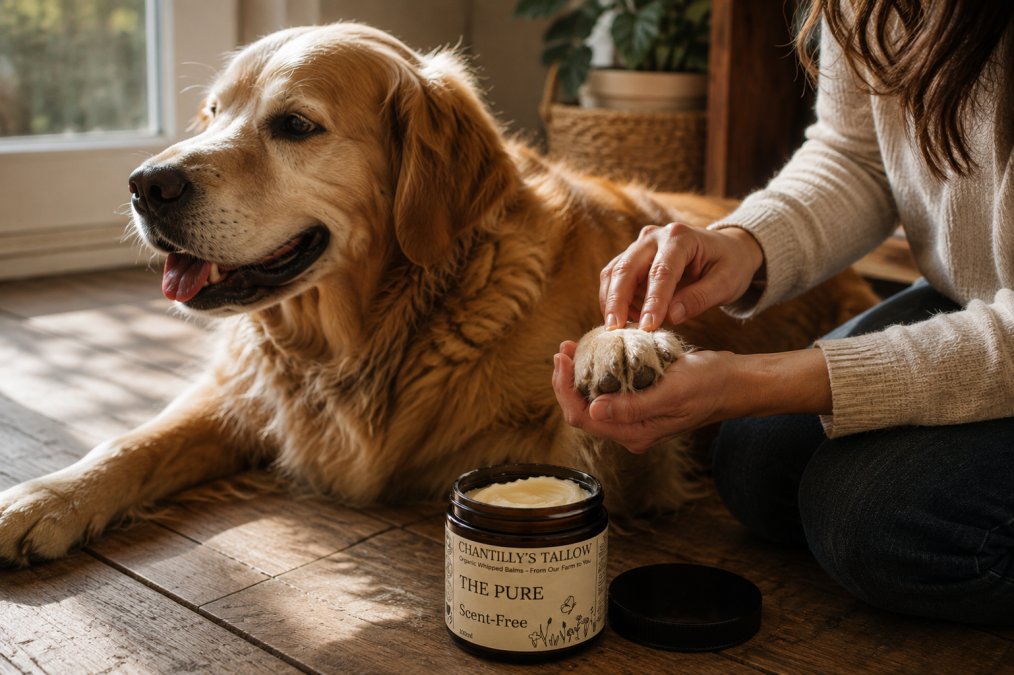
Illustration showing the benefits of golden and retriever and lying concepts for tallow skincare
Sensitive and Allergy-Prone Coats
Allergy-prone dogs often have a compromised skin barrier as a baseline condition. Allergens trigger an immune response that further degrades the lipid layer, creating a cycle of itch, scratch, and secondary infection. Tallow skincare addresses the barrier deficiency directly rather than masking symptoms.
For dogs with sensitive skin, the most important quality in any topical product is a short, recognisable ingredient list. Tallow balms formulated without synthetic fragrances, parabens, or artificial preservatives present a minimal allergen load. Many pet owners find that a simple tallow balm with complementary ingredients causes far fewer reactions than products with longer, more complex formulations.
Is Tallow Lick-Safe for Dogs?
Tallow is lick-safe for dogs when the balm contains only food-grade ingredients. Pure rendered tallow is non-toxic and is essentially a cooking fat. The safety question becomes relevant only when additional ingredients are present.
A tallow balm that includes essential oils such as tea tree, eucalyptus, or clove is not safe for dogs to lick, regardless of concentration. These compounds are toxic to dogs even in trace amounts, as documented by the Australian Veterinary Association's guidance on pet toxins.
Ingredients to Check Before Applying Any Balm
Before applying any tallow balm to a dog, read the full ingredient list against this checklist:
Safe ingredients (generally well-tolerated):
- Grass-fed beef tallow
- Beeswax (acts as a natural barrier without toxicity)
- Organic extra virgin olive oil (rich in oleic acid, non-toxic)
- Jojoba oil (technically a liquid wax, non-toxic)
- Macadamia oil (safe for dogs in topical amounts)
- Olive squalene (a skin-identical emollient, non-toxic)
Ingredients to avoid on dogs:
- Tea tree oil (toxic to dogs at any concentration)
- Eucalyptus oil (toxic to dogs)
- Clove, cinnamon, or citrus essential oils
- Xylitol (sometimes used as a preservative in cosmetics)
- Zinc oxide (found in some balms, toxic if ingested by dogs)
A balm containing only tallow, beeswax, olive oil, jojoba oil, and macadamia oil presents negligible risk if a dog licks the application site. If you are uncertain about any ingredient, contact your veterinarian before use.
How to Treat Dog Hot Spots Naturally with Tallow
Hot spots, clinically called acute moist dermatitis, are localised areas of inflamed, infected skin that develop rapidly when a dog scratches, licks, or bites compulsively. Tallow's anti-inflammatory fatty acids and skin barrier-rebuilding properties make it a useful supportive treatment, though active bacterial infection may still require veterinary antibiotic treatment.
Tallow should only be applied to clean, dry skin. Applying it to an actively weeping lesion traps moisture and can worsen anaerobic bacterial conditions.
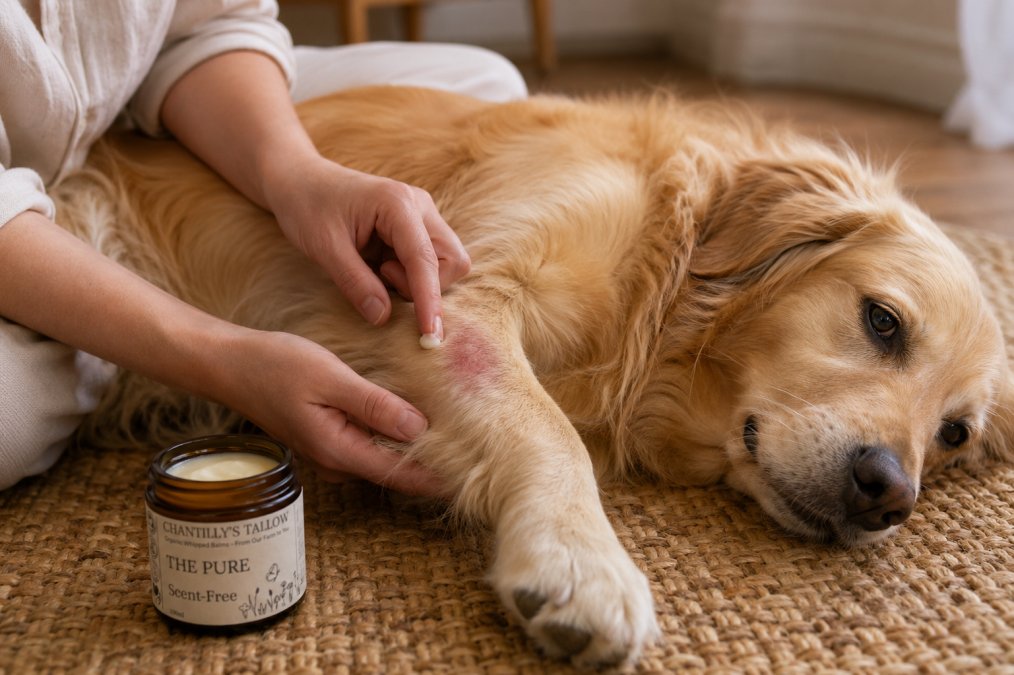
Step-by-step visual guide for Close for tallow skincare
Step-by-Step Application for Hot Spots and Irritated Areas
- Trim the fur around the hot spot. Hair trapping moisture is a primary driver of hot spot persistence. Use blunt-nosed scissors and trim at least 2-3 centimetres beyond the visible irritation boundary.
- Clean the area gently. Use saline solution or plain water on a clean cloth. Avoid alcohol-based wipes, which damage already-compromised tissue.
- Allow the skin to dry completely. Pat dry and wait at least five minutes before applying anything.
- Warm a small amount of tallow balm between your fingertips. Body heat is sufficient to soften it. Use a pea-sized amount for a 5-centimetre area.
- Apply with light, circular strokes. Do not press hard. The goal is to deposit the balm on the skin surface, not to rub it in aggressively.
- Allow a few minutes for absorption before letting the dog move freely. If the dog immediately licks the area, a loose bandage or a recovery collar may be needed for 15-20 minutes.
- Repeat twice daily until the skin shows visible improvement: reduced redness, no weeping, and the dog showing less interest in the area.
If the hot spot does not improve within 48 hours, or if it spreads, consult a veterinarian.
Applying Tallow to Paw Pads and the Dry Nose
For paw pads, apply tallow balm immediately after a walk, when pads are clean. Work the balm into the grooves between pads and the edges where cracking typically starts. Apply before bed if possible, as this gives several hours of absorption time with reduced licking.
For a dry nose, apply a very small amount, roughly the size of a grain of rice, to the nasal planum. The dog will lick most of it off almost immediately, which is fine if the formulation is lick-safe. Repeated small applications two to three times daily are more effective than one large application.
Learn more about tallow's benefits → →
Application Area | Amount Per Application | Frequency | Key Tip |
|---|---|---|---|
Hot spots | Pea-sized | Twice daily | Apply only to clean, dry skin |
Cracked paw pads | Small fingertip amount | Once to twice daily | Apply post-walk or before bed |
Dry nose | Grain-of-rice amount | Two to three times daily | Expect licking; small amounts work |
Skin rashes | Thin layer | Once to twice daily | Patch test first on allergy-prone dogs |
Eczema or psoriasis-type patches | Thin layer | Twice daily | Monitor for 48 hours after first use |
Tallow Skincare for Pets: DIY vs. Store-Bought Safety
Many pet owners attempt to render tallow at home and apply it directly. Home rendering rarely produces fully purified fat. Impurities, residual proteins, and water content can introduce bacterial contamination, particularly if stored improperly. Raw tallow without antimicrobial co-ingredients also has a shorter shelf life and can go rancid, producing compounds that irritate rather than soothe skin.
Store-bought tallow balms from reputable producers use properly rendered, filtered tallow and typically include complementary ingredients like beeswax for texture stability and jojoba oil or macadamia oil for additional fatty acid diversity. The average shelf life is 9 months when stored in a cool location away from direct sunlight and under 28°C, and the microbial risk is significantly lower than home-rendered alternatives.
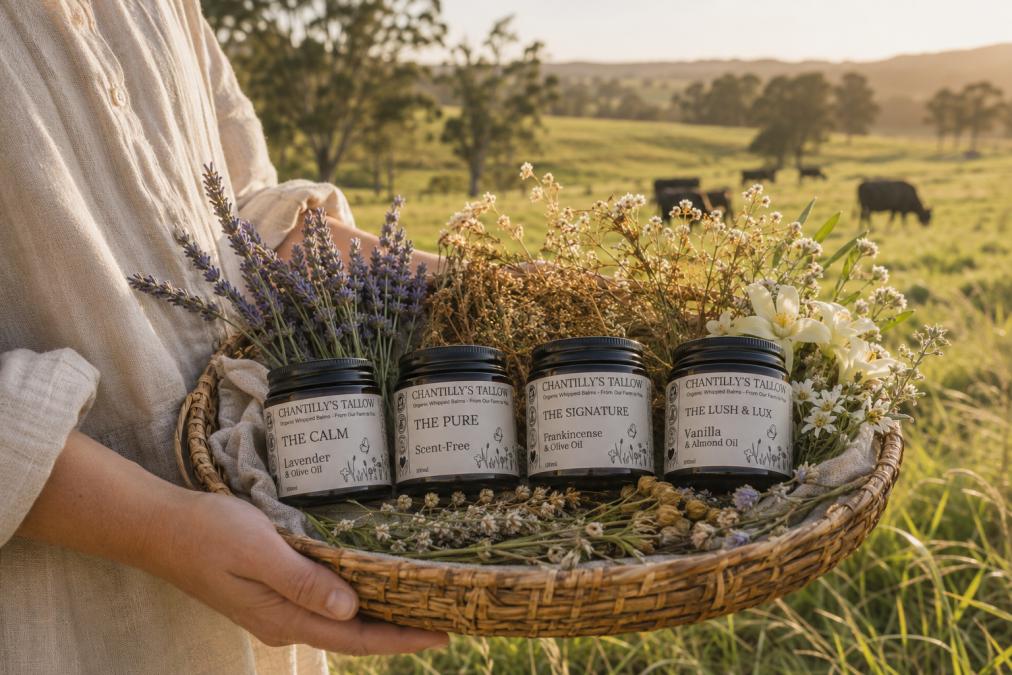
A tallow balm sourced from grass-fed cattle will have a different fatty acid and vitamin profile than one from conventionally raised cattle. peer-reviewed analysis of grass-fed versus grain-fed beef fat composition confirms that grass-fed fat contains meaningfully higher levels of conjugated linoleic acid and fat-soluble vitamins, both of which contribute to the anti-inflammatory and nourishing properties that make tallow useful on skin.
Contraindications and When to Avoid Tallow on Pets
Tallow is broadly well-tolerated, but there are situations where it is the wrong choice or where it needs to be used with caution.
Open wounds and deep lacerations. Tallow is not a wound treatment. Applying any occlusive product to an open wound risks trapping bacteria and slowing drainage. Clean wounds should be assessed by a veterinarian.
Active fungal infections (ringworm, yeast dermatitis). Fatty, occlusive products can create conditions that favour fungal growth. If the skin irritation has a circular pattern, a musty odour, or is accompanied by scaly, flaking skin, have it assessed before applying tallow.
Known beef protein allergy. Dogs with confirmed beef allergies may react to topical tallow, as protein traces in imperfectly rendered fat can trigger a contact response. If your dog has a beef dietary allergy, introduce any tallow product with a 24-hour patch test.
Cats. This guide focuses on dogs. Cats have significantly different metabolic pathways and are far more sensitive to topical products. Consult a veterinarian before applying any tallow product to a cat.
Why Grass-Fed Tallow Outperforms Synthetic Pet Skincare
The conventional pet skincare market is dominated by products built around synthetic emollients, preservatives, and fragrance compounds. Most synthetic moisturisers work by creating an occlusive barrier that prevents water loss. They do not deliver bioavailable lipids or support the skin barrier's own repair mechanisms.
Grass-fed tallow does both. The lipid profile is structurally compatible with skin cell membranes. The fat-soluble vitamins support cellular function. The anti-inflammatory fatty acids, particularly conjugated linoleic acid, reduce the inflammatory signalling that drives itch and redness at the cellular level.
Synthetic barrier creams often require daily application to maintain their effect because they do not address the underlying barrier deficiency. Tallow skincare, used consistently, tends to reduce the frequency of application needed over time as the skin barrier strengthens. For pet owners who have cycled through veterinary-prescribed topical treatments for conditions like eczema-type skin or recurrent dermatological irritation, tallow represents a fundamentally different approach: feeding the skin rather than coating it.
Pet skin health is a topic Chantilly's Tallow takes seriously. Our small-batch, grass-fed tallow balm is formulated without essential oils, synthetic fragrances, or artificial preservatives, making it one of the more straightforward options for pet owners who want a genuinely lick-safe product with a transparent ingredient list.
Caring for a dog's skin irritation is frustrating when nothing seems to hold. Tallow skincare for pet skin irritation works differently because it addresses the lipid barrier deficiency at the root of most chronic skin problems rather than masking symptoms. Chantilly's Tallow's grass-fed, handcrafted balm is formulated with exactly the kind of short, recognisable ingredient list that makes it appropriate for sensitive, allergy-prone animals. Learn more about tallow's benefits and find the right formulation for your pet.
Frequently Asked Questions
Is beef tallow safe for dogs with sensitive or itchy skin?
Beef tallow is generally well-tolerated by dogs with sensitive skin. Its fatty acid profile closely mirrors the skin's natural lipids, which reduces the risk of irritation compared to synthetic moisturisers. Grass-fed tallow contains no artificial fragrances, preservatives, or harsh chemicals. That said, every dog is different. Do a small patch test on a non-irritated area first and monitor for redness or increased scratching over 24 hours before applying more broadly.
Can I put tallow balm on my dog's paws?
Yes. Tallow balm is one of the most practical options for cracked paw pads because it absorbs quickly and forms a protective barrier without leaving a greasy residue that attracts grit. Apply a small amount after walks, especially in dry or cold conditions. If your dog licks their paws immediately after application, choose a formulation made only with food-safe ingredients such as grass-fed tallow, olive oil and beeswax, with no essential oils or synthetic additives.
Are there any risks to using tallow on pets that lick their skin?
Pure, 100% grass-fed beef tallow is non-toxic if ingested in small amounts, making it one of the safer topical options for pets that lick treated areas. The risk increases when balms include added essential oils, which can be toxic to dogs and cats even in small doses. Always read the ingredient list carefully. If a product contains eucalyptus, tea tree, or clove oil, do not use it on pets. Stick to formulations with minimal, food-safe ingredients.
What makes grass-fed tallow better for pet skincare than synthetic alternatives?
100% Grass-fed tallow contains a higher concentration of fat-soluble vitamins A, D, E, and K, along with conjugated linoleic acid and oleic acid. These compounds support skin barrier repair and have anti-inflammatory properties. Synthetic pet moisturisers often rely on petroleum-derived occlusive agents that sit on the skin's surface without contributing to cellular repair. Tallow's lipid structure is close enough to mammalian skin lipids that it absorbs readily, delivering nourishment rather than just sealing moisture in temporarily.