
 how-to
How to Treat Facial Eczema Naturally: A Gentle Guide
Table of Contents
- What Facial Eczema Is and Why the Face Needs Different Care
- How to Manage Eczema Triggers Naturally
- A Gentle Skincare Routine for Dermatitis on the Face
- The Benefits of Grass-Fed Tallow for Eczema-Prone Skin
- Soothing Itch and Supporting the Skin Barrier
- The Emotional Side of Facial Eczema
- When to See a Doctor
- Frequently Asked Questions
Last Updated: September 15, 2026
What Facial Eczema Is and Why the Face Needs Different Care
Facial eczema is a form of atopic dermatitis that makes the skin on your face dry, itchy, red and inflamed. Treating it naturally starts with one truth: facial skin is thinner and more reactive than anywhere else on your body, so it needs a gentler approach than standard advice suggests.
This guide from Chantilly's Tallow covers the practical steps we've learned from tallow-based skincare on real, reactive skin: spotting triggers, building a routine that doesn't sting, and knowing when to call a doctor.
The skin barrier on your face is your first line of defence. When it's compromised, moisture escapes and irritants get in easily, which is why harsh scrubs, strong actives and long, hot showers can turn a mild flare into a miserable one.
The good news: gentle, consistent care does most of the heavy lifting. Below, we'll show you how to do that without stripping your skin further.
healthdirect guide to eczema
How to Manage Eczema Triggers Naturally
Managing eczema triggers naturally comes down to one habit: noticing what your skin reacts to, then removing it. Most people blame the wrong thing, so track rather than guess.
Common Facial Triggers to Watch For
The usual suspects are closer than you think, and facial skin reacts to things body skin often tolerates:
- Fragranced cleansers, toners and "soothing" mists, fragrance is one of the most common contact irritants on facial skin
- Hot water and long showers, which strip the lipid barrier faster on the face than elsewhere
- Rough towels and washing detergent residue left in pillowcases and face cloths
- Sweat sitting on the skin after exercise, especially along the hairline and jaw
- Sudden weather changes, dry indoor heating and air-conditioning, all of which pull moisture from thin facial skin
- Stress, poor sleep and skipped meals, the internal triggers that show up on the face first
- Hair products, including shampoo, conditioner and styling products that run onto the forehead and temples in the shower
- Sunscreen and makeup, particularly anything with added fragrance or drying alcohol
A Simple Trigger-Tracking Method
Keep a short daily note for two to three weeks recording four things: what you put on your face, how your skin looked and felt, your sleep, and your stress level. Patterns usually emerge within a fortnight, often a product you'd never have suspected, or a clear link between poor sleep and next-day redness.
Change one variable at a time. If you swap your cleanser, your moisturiser and your laundry detergent in the same week and your skin calms down, you've learned nothing about which change mattered.
Patch Testing Protocols Before Trying Anything New
This is the step almost everyone skips, and it saves the most grief. Before putting anything new on your face, patch test it.
Apply a small amount to your forearm or behind your ear, not your face. Wait 24 to 48 hours. If there's no redness, itching or swelling, apply a small amount along the jaw and wait another 24 hours before wider use. If your skin reacts at any stage, stop.
A few rules that make patch testing actually useful:
- Test one new product at a time, not three at once. If you introduce several products together and react, you won't know which one caused it, and you'll have to start over.
- Test on calm skin, not mid-flare. During a flare, almost everything can sting, which tells you nothing about the product itself.
- Keep the test patch dry and don't wash it off immediately, you want to see how the skin responds over a full day.
- If you've had a severe reaction to a skincare product before, or you have known contact allergies, ask your doctor about formal patch testing rather than relying on home testing alone.
Reducing Triggers Without Overhauling Your Life
You don't need to eliminate every trigger, that's exhausting and rarely necessary. Focus on cheap, consistent changes: a fragrance-free cleanser, lower shower temperature, weekly pillowcase washes in fragrance-free detergent, and rinsing your face after exercise. Small, repeatable changes beat an overhaul you abandon in a week.
ASCIA information on eczema and allergy
A Gentle Skincare Routine for Dermatitis on the Face
A gentle skincare routine for dermatitis on the face should clean without stripping, moisturise deeply, and protect the barrier. Keep it short, fewer products means fewer chances for irritation.
Here's a simple daily rhythm:
- Cleanse with lukewarm water and a fragrance-free cleanser, or just water on calm days. Keep the cleanse under 60 seconds, longer contact time pulls oil from an already-compromised barrier.
- Pat dry with a soft towel. Never rub. Leave the skin slightly damp rather than bone-dry.
- Moisturise within three minutes while skin is still slightly damp. This is the window where a balm traps water rather than sitting on top of it.
- Repeat morning and night, and after any time in water, swimming, showering, even a long hand-wash that splashes your face.
Facial-Specific Application Techniques
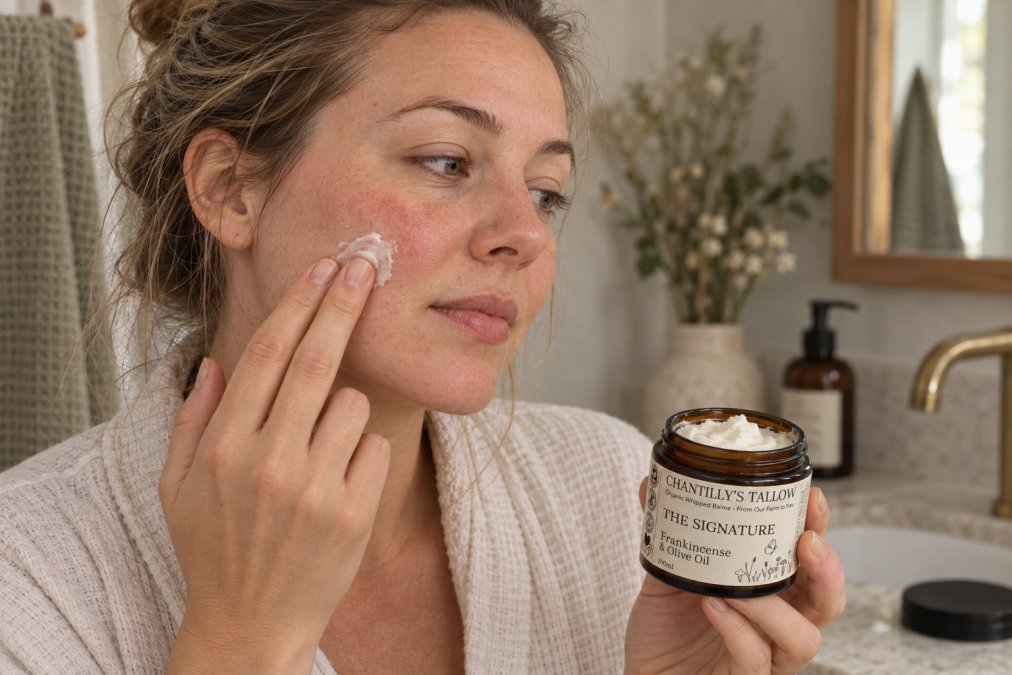
Facial skin rewards a lighter touch. Warm a pea sized amount of balm between your fingertips, then press it into the skin rather than dragging. Work upward and outward, and go easy around the eyes and nose folds, where skin is thinnest.
Timing and quantity matter. Moisturiser on damp skin traps water in; on bone-dry skin it mostly sits on top. Damp skin, every time. More balm isn't better; a heavy layer can clog pores and trigger a different breakout. Start light, adding a second thin layer only if skin still feels tight after ten minutes.
A few facial-specific cautions worth knowing:
- Around the eyes: use the least product of anywhere on the face. The skin here is roughly the thinnest on the body, and balm can migrate into the eye and cause irritation.
- Along the jaw and hairline: these areas are prone to both eczema and acne, so keep application thin and avoid occlusive layering.
- On broken or weeping skin: do not apply balm over an open, crusting or weeping patch. That pattern needs medical review first (see the warning further down).
- After cleansing: if your face feels tight or squeaky-clean, your cleanser is too harsh. Switch to a cream or milk cleanser rather than a foaming one.
Building the Routine Around One Product, Not Ten
A common pattern with facial eczema is a shelf of half-used products, each introduced during a different flare and never abandoned. Every extra product is another potential trigger, and it becomes impossible to tell what's helping and what's hindering.
The simplest approach is a gentle cleanser and one well-made moisturising balm, held steady for at least a week before changing anything. At Chantilly's Tallow, our balms are designed to be that single moisturising step, made from 100% grass-fed, organic beef tallow, handcrafted in small batches on our farm and sent direct from farm to skin. No fillers, no fragrance in Our Scent-Free Balm and no long ingredient list for reactive facial skin to react to.
If you're coming from a shelf of conventional creams and worried about switching, that's fair. Introduce the balm on its own, patch test first, use a small amount, and give your skin a week to adjust.
health direct guide to eczema
The Benefits of Grass-Fed Tallow for Eczema-Prone Skin
The benefits of grass-fed tallow for eczema come down to how closely it matches your skin's own oils.
Soothing Itch and Supporting the Skin Barrier
What actually helps:
Royal Children's Hospital eczema clinical guidance
The Emotional Side of Facial Eczema
When to See a Doctor
Medical care matters most when:
Frequently Asked Questions
What is the fastest way to heal eczema on the face?
There is no overnight fix for facial eczema, but you can calm a flare-up faster by stopping all unnecessary products, washing with lukewarm water only, and applying a simple emollient like tallow balm within three minutes of washing. Cool compresses for 10 to 15 minutes help break the itch-scratch cycle. If the skin is weeping, crusted or spreading after a few days, see a doctor rather than layering more products on top.
Is it safe to use natural fats like tallow on inflamed facial skin?
Tallow is bio-compatible with human skin cell structure, rich in fatty acids and low in additives, which is why many people with eczema-prone skin tolerate it well. That said, inflamed skin can react to anything new, so always patch test first. Apply a small amount behind the ear or on the inner forearm, wait 24 to 48 hours, and check for redness, itching or swelling before using it on your face.
Why is grass-fed tallow recommended for sensitive, eczema-prone skin?
The benefits of grass-fed tallow for eczema come down to what it does not contain as much as what it does. Grass-fed tallow is rich in fatty acids similar to those in the skin's lipid barrier, and it is typically free from synthetic fragrances, preservatives and fillers that trigger reactions. It supports barrier restoration and helps reduce transepidermal water loss, which is a key driver of dryness and flare-ups on facial skin.
How should I store tallow balm and how long does it last?
Tallow balm storage and shelf life depend on temperature and hygiene. Keep it in a cool, dark place below 25°C, away from direct sunlight and steam. In warm weather, store it in the fridge to stop it melting and going grainy. With clean, dry hands and no water getting into the jar, an unopened balm lasts up to 12 months, and once opened, aim to use it within 6 months for best freshness and texture.