 ultimate-guide
Natural Anti Aging Skincare Routine: 2026 Guide
Table of Contents
- Why a Natural Anti Aging Skincare Routine Works Differently
- Tallow Balm for Dry Skin: Why It Belongs in Your Routine
- How to Use Tallow Balm in Your Skincare Routine
- Key Ingredients in a Natural Anti Aging Skincare Approach
- Lifestyle and Internal Factors That Accelerate Skin Ageing
- Shelf Life of Organic Tallow Balm: Storage and Longevity
- Sustainability, Ethical Sourcing, and What to Look For
- Frequently Asked Questions
Last Updated: August 29, 2026
A natural anti aging skincare routine is not a trend. It is a return to what skin has always needed: compatible nourishment, protection from environmental stressors, and ingredients that work with the lipid barrier rather than against it. At Chantilly's Tallow, we hear from customers in their 40s, 50s, and beyond who have spent years cycling through synthetic serums and still struggle with dryness, fine lines, and reactive skin. The answer is rarely a more complex formula. It is usually a simpler, more honest one.
This guide breaks down how to build a natural anti aging skincare routine that addresses cell turnover, hydration, collagen production, and sun protection without relying on ingredients that compromise skin sensitivity.
Why a Natural Anti Aging Skincare Routine Works Differently
The most common mistake people make with anti aging skincare is assuming that more active ingredients equal better results. Synthetic formulations often disrupt the skin's natural pH balance and strip the lipid barrier in the process of delivering actives. Botanical alternatives work more gradually but support the skin's own repair mechanisms rather than overriding them.
This distinction matters for mature skin. As skin ages, its capacity to regenerate the lipid barrier slows. Products that damage that barrier, even temporarily, leave skin more vulnerable to photoaging, environmental stressors, and moisture loss. A natural approach prioritises reinforcing what is already there.
How Synthetic Ingredients Compare to Botanical Alternatives
Synthetic ingredients are not categorically harmful, but formulations built around synthetic actives often include preservatives, emulsifiers, and fragrance compounds that sensitise skin over time. Botanical extracts, cold-pressed oils, and animal-derived fats like tallow carry a broader spectrum of naturally occurring fatty acids, vitamins, and antioxidants that the skin recognises and processes efficiently.
A botanical serum or tallow-based moisturiser rarely triggers the barrier disruption that some synthetic formulations do, making them more sustainable for daily use on mature or sensitive skin.
Ingredient Safety and Patch Testing for Sensitive Skin
Even natural ingredients can cause reactions. Before introducing any new product into your anti aging skincare routine, patch test on the inner forearm for 48 hours. This is especially important for those with a history of eczema, dermatitis, or contact allergies.
According to Australasian College of Dermatologists guidance on sensitive skin, patch testing is the only reliable way to identify contact sensitivities before a full-face application. For tallow-based products, the risk of reaction is low given the absence of synthetic fragrance and preservatives, but testing is still good practice.
Tallow Balm for Dry Skin: Why It Belongs in Your Routine
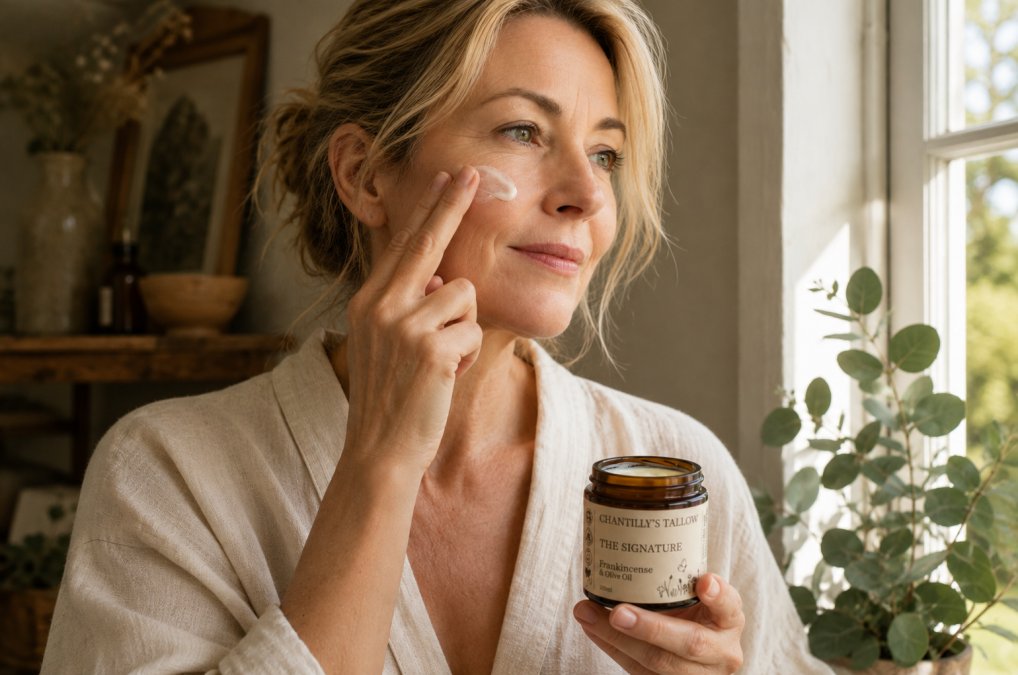
Tallow balm for dry skin is one of the most bio-compatible moisturisers available because beef tallow shares a fatty acid profile remarkably similar to human sebum. The lipid composition of grass-fed tallow, including stearic acid, oleic acid, and palmitic acid, mirrors the fats naturally present in healthy skin.
For mature skin specifically, this compatibility matters. The skin's ability to produce its own sebum declines with age, leaving the lipid barrier thinner and more prone to transepidermal water loss. Tallow balm replenishes those lipids directly, supporting skin elasticity and reducing the appearance of fine lines without occlusive heaviness.
Professional illustration showing Close for anti aging skincare
Bio-Compatibility and the Lipid Barrier
The lipid barrier is the outermost protective layer of the skin, composed of ceramides, cholesterol, and fatty acids that prevent moisture loss and shield against environmental stressors. When compromised, skin becomes dry, reactive, and more susceptible to photoaging and hyperpigmentation.
Tallow's fatty acid profile slots into this barrier naturally. Unlike many plant-based oils that are high in linoleic acid but low in the saturated fats the barrier actually needs, tallow provides the full spectrum. This is why many people with long-standing dry skin conditions find tallow balm effective where other moisturisers have failed.
Grass-Fed Tallow vs Store-Bought Moisturisers
Most conventional moisturisers are water-in-oil emulsions held together by synthetic emulsifiers. They feel hydrating immediately after application, but the water evaporates and the emulsifiers can gradually disrupt the skin's natural moisture regulation. Tallow balm contains no water, no emulsifiers, and no synthetic preservatives.
Store-bought options that use natural ingredients often combine tallow or plant butters with jojoba, macadamia, or olive oil, which are all beneficial. But the quality of the base fat matters enormously. 100% Grass-fed tallow is higher in fat-soluble vitamins A, D, E, and K than conventionally raised equivalents, and these vitamins directly support collagen production and skin repair.
How to Use Tallow Balm in Your Skincare Routine
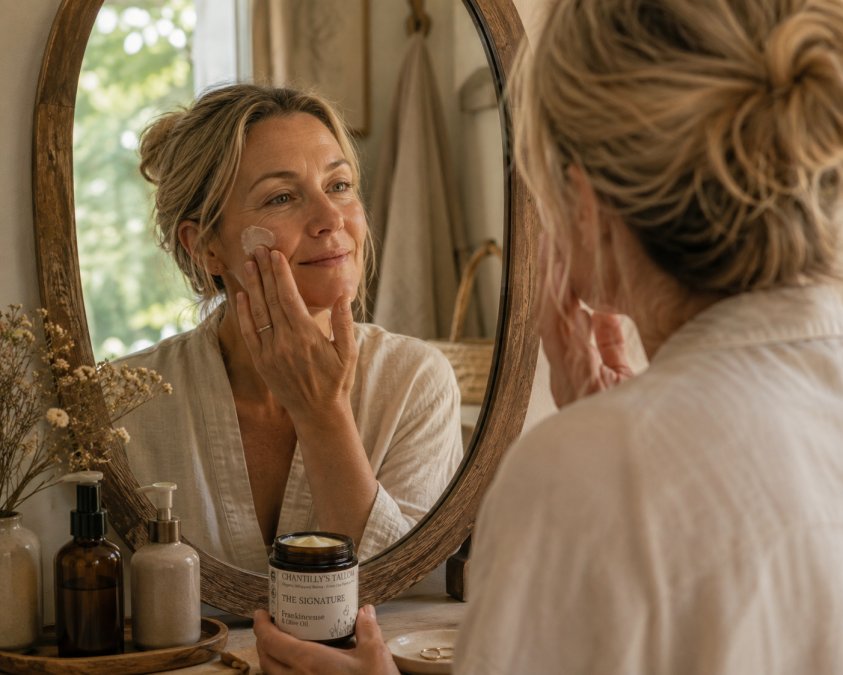
Knowing how to use tallow balm correctly makes the difference between glowing, nourished skin and a greasy, congested complexion. Apply to damp skin, use less than you think you need, and layer correctly with other actives. Applying balm to slightly damp skin after cleansing locks hydration into the skin rather than simply sitting on top of it.
Step-by-step visual guide for Flat for anti aging skincare
Morning Routine: Cleansing, Serum, and Sun Protection
A natural morning routine for anti-aging skincare does not need to be complicated:
- Gentle cleansing - Use a mild, pH-balanced cleanser that does not strip the skin or a natural fibre re-useable face cloth.
- Vitamin C serum - Apply a botanical antioxidant serum to damp skin to neutralise free radicals and support collagen production.
- Tallow balm - Apply a small amount, roughly a pea size, while skin is still slightly damp. Warm it between fingertips first to aid absorption.
- Sun protection - Apply a broad-spectrum SPF 30 or higher as the final step. According to Cancer Council Australia's sun protection guidelines, daily SPF use is the single most effective intervention against photoaging and skin cancer risk. I prefer a natural and organic sunscreen.
Sun protection is the most important anti-aging tool available. No serum or moisturiser compensates for unprotected UV exposure. Wearing a hat while outdoors is a natural alternative I prefer.
Evening Routine: Exfoliation, Treatment, and Night Cream
The evening routine is where the real repair work happens. Skin cell turnover peaks overnight, making this the best window for treatments that support exfoliation and collagen production.
- Double cleanse if wearing SPF - An oil-based cleanser first, followed by a gentle cleanser, ensures sunscreen and environmental residue are fully removed. I prefer using natural sun protection like hats and a natural cleansing with raw honey or just water and bamboo fibre cloths.
- Exfoliation (2-3 times per week) - Use a gentle natural exfoliant, such as a low-concentration lactic acid, to support cell turnover without physical abrasion.
- Treatment serum - Apply peptides, hyaluronic acid, or a retinol alternative such as bakuchiol.
- Tallow balm as night cream - A slightly more generous application than the morning routine.
Step | Morning | Evening | Frequency |
|---|---|---|---|
Gentle cleanse | Yes | Yes (double cleanse if wearing SPF) | Daily |
Vitamin C serum | Yes | No | Daily AM |
Tallow balm | Small amount, damp skin | Slightly more generous | Daily |
SPF 30+ | Yes (final step) | No | Daily AM |
Exfoliation | No | Yes | 2-3x per week |
Peptides or retinol alternative | No | Yes | Nightly |
Key Ingredients in a Natural Anti Aging Skincare Approach
The most effective natural anti aging skincare routines are built around a small number of well-understood ingredients rather than a long list of trendy actives.
Antioxidants, Vitamin C, and Free Radical Defence
Free radicals are unstable molecules generated by UV exposure, pollution, and metabolic processes. They damage collagen and elastin, accelerating visible signs of ageing. Antioxidants neutralise free radicals before they can cause that damage.
Vitamin C is the most studied topical antioxidant. It supports collagen synthesis, reduces hyperpigmentation, and brightens skin texture. For a natural routine, look for vitamin C derived from botanical sources such as kakadu plum, which has one of the highest naturally occurring concentrations of any ingredient available. Tallow itself contributes antioxidant activity through its vitamin E content.
Hyaluronic Acid, Peptides, and Retinol Alternatives
Hyaluronic acid is a naturally occurring molecule that holds many times its weight in water, making it one of the most effective hydration ingredients available. It plumps fine lines and improves skin texture without penetrating deeply.
Peptides are short chains of amino acids that signal the skin to produce more collagen. They are one of the most promising retinol alternatives for those who find retinol too irritating.
Bakuchiol is the most widely discussed retinol alternative in natural skincare. Research from International Journal of Cosmetic Science on bakuchiol efficacy suggests it delivers comparable improvements in fine lines and skin elasticity to retinol with significantly lower rates of irritation.
Lifestyle and Internal Factors That Accelerate Skin Ageing
What you put on your skin is only half the equation. Lifestyle factors drive a significant portion of visible skin ageing.
Sleep is when skin repair and cell turnover are most active. Chronic sleep deprivation elevates cortisol, which breaks down collagen and impairs the skin barrier. Seven to nine hours of quality sleep is a functional requirement for mature skin.
Nutrition directly affects skin elasticity and hydration. Diets rich in omega-3 fatty acids, fat-soluble vitamins, and collagen-supporting nutrients like zinc and vitamin C correlate with better skin condition over time. Processed foods high in refined sugar accelerate glycation, which stiffens collagen fibres and contributes to loss of skin elasticity.
Hydration is straightforward but consistently underestimated. Topical hyaluronic acid works best when the body is adequately hydrated from within.
Sun exposure habits are the largest controllable accelerator of photoaging. Daily SPF use, even on overcast days, makes a measurable difference over years. According to Australian Institute of Health and Welfare data on UV-related skin damage, UV radiation is the primary environmental cause of premature skin ageing in Australia.
Shelf Life of Organic Tallow Balm: Storage and Longevity
The shelf life of organic tallow balm is typically 12 to 24 months from the date of production when stored correctly. This range depends on the purity of the tallow, whether antioxidant-rich oils have been added, and how the product is handled during use.
Optimal storage conditions:
- Store in a cool, dark location away from direct sunlight and heat sources
- Keep the lid tightly closed between uses to minimise oxidation
- Avoid introducing water into the jar, as moisture accelerates rancidity
- Refrigeration extends shelf life but is not required if the ambient temperature stays below 28°C
- A small amount of vitamin E oil in the formulation acts as a natural preservative and extends stability
Signs that tallow balm has passed its best: a noticeably rancid or sour smell, a change in colour from off-white or pale yellow to darker tones, or an altered texture. Fresh tallow balm has a mild, clean, slightly fatty scent. Rancid tallow smells distinctly unpleasant and should not be applied to skin.
Chantilly's Tallow products are handcrafted in small batches, which means each jar is made close to the time of sale. Batch dating is included so you know exactly when your product was made.
Sustainability, Ethical Sourcing, and What to Look For
The natural skincare market has a transparency problem. Many products labelled "natural" or "organic" contain synthetic preservatives, petroleum derivatives, or ingredients sourced through supply chains that are neither ethical nor sustainable.
For tallow-based products specifically, the sourcing of the animal fat is the most important variable. 100% Grass-fed, pasture-raised cattle produce tallow with a superior fatty acid profile compared to conventionally raised animals. Regenerative agriculture, which prioritises soil health and biodiversity, is a meaningfully different choice from feedlot-raised equivalents.
Questions worth asking of any tallow skincare brand:
- Is the tallow sourced from 100% grass-fed, pasture-raised cattle?
- Is the farming operation traceable, ideally direct from farm to consumer?
- Are additional ingredients certified organic?
- Is the product made in small batches to ensure freshness?
- Are synthetic fragrances, parabens, or petrochemical derivatives absent from the formulation?
Chantilly's Tallow sources tallow directly from our own Gippsland farm, where cattle are 100% grass-fed and organically raised. There are no middlemen between the farm and the finished product. For further guidance on evaluating organic claims and ingredient transparency, the Australian Competition and Consumer Commission guidance on green and organic claims provides a useful framework for understanding what labelling terms are legally meaningful.
Building a genuinely effective natural anti aging skincare routine takes time to calibrate, but the fundamentals are consistent: protect the lipid barrier, support cell turnover, defend against free radicals, and use SPF every single day. Chantilly's Tallow was built specifically to address that gap, with 100% grass-fed tallow, handcrafted in small batches, and formulated without synthetic fragrance, preservatives, or fillers. If you are ready to simplify your routine and give your skin what it actually needs, Find Your Balm and start with your favourite scent or search for one that fits your needs.
Frequently Asked Questions
What are the benefits of using tallow for anti-aging?
Grass-fed beef tallow closely mirrors the fatty acid profile of human skin, which helps it absorb without sitting on the surface. It delivers fat-soluble vitamins A, D, E, and K directly to skin cells, supporting collagen production, cell turnover, and skin elasticity. Unlike many synthetic moisturisers, it reinforces the lipid barrier rather than coating it, which makes it particularly useful for mature skin dealing with fine lines, dryness, and reduced elasticity.
Can a natural skincare routine effectively reduce fine lines?
A consistent natural anti aging skincare routine can visibly reduce fine lines when it addresses the right causes: sun damage, dehydration, weakened skin barrier, and low cell turnover. Ingredients like vitamin C, peptides, hyaluronic acid, and tallow-based moisturisers each target different aspects of skin ageing. Results take time, typically 8 to 12 weeks of daily use, but many people notice improved skin texture and hydration within the first few weeks.
Is tallow balm suitable for all skin types, including oily or acne-prone skin?
Tallow balm is non-comedogenic when sourced from 100% grass-fed cattle and used without synthetic fillers. Its fatty acid composition is close to the skin's own sebum, which means it signals the skin to regulate oil production rather than overproduce it. People with oily or combination skin often find that using a small amount as a night cream improves skin texture without clogging pores. Those with reactive skin should always patch test on the inner arm for 24 hours before full application.
How do I store natural tallow-based skincare to maintain potency?
Store tallow balm in a cool, dark location away from direct sunlight and heat, ideally below 28°C. A bathroom cabinet or bedside drawer works well. Avoid leaving the jar in a hot car or near a window. Properly stored, a pure grass-fed tallow balm typically lasts 12 to 18 months. Always use a clean spatula or dry fingertip to scoop product, as moisture introduced into the jar can shorten shelf life significantly.
What ingredients should I look for in natural anti-aging products?
Look for ingredients that address multiple signs of ageing at once. Vitamin C brightens hyperpigmentation and stimulates collagen. Hyaluronic acid draws moisture into the skin for plumping. Peptides signal skin cells to produce more collagen and elastin. Botanical extracts like rosehip and sea buckthorn provide antioxidants that combat free radicals. For deep moisturising, grass-fed tallow, jojoba, macadamia, and olive oil all support the lipid barrier without synthetic fillers or hormone-disrupting preservatives.
What is the most natural anti-aging skincare approach?
The most natural approach combines a minimal ingredient routine with lifestyle habits that support skin health from the inside. This means gentle cleansing to preserve pH balance, broad-spectrum SPF daily to prevent photoaging, a nutrient-dense moisturiser like tallow balm to restore the lipid barrier, and consistent sleep and hydration to support cell turnover overnight. Reducing processed foods, alcohol, and UV exposure makes a measurable difference alongside any topical routine.