 ultimate-guide
Is Tallow Non Comedogenic? What It Means for Your Skin
Table of Contents
- What the Comedogenic Scale Says About Tallow
- Tallow Skincare for Sensitive Skin: Who Should Try It
- Tallow vs Jojoba Oil for Face: Which Suits Your Skin
- How to Store Tallow Balm
- The Bottom Line
- Frequently Asked Questions
Last Updated: September 16, 2026
What the Comedogenic Scale Says About Tallow
The comedogenic scale rates how likely an ingredient is to clog pores, from 0 (non comedogenic) to 5 (highly likely). Beef tallow typically sits low, but how a finished balm is made matters more.
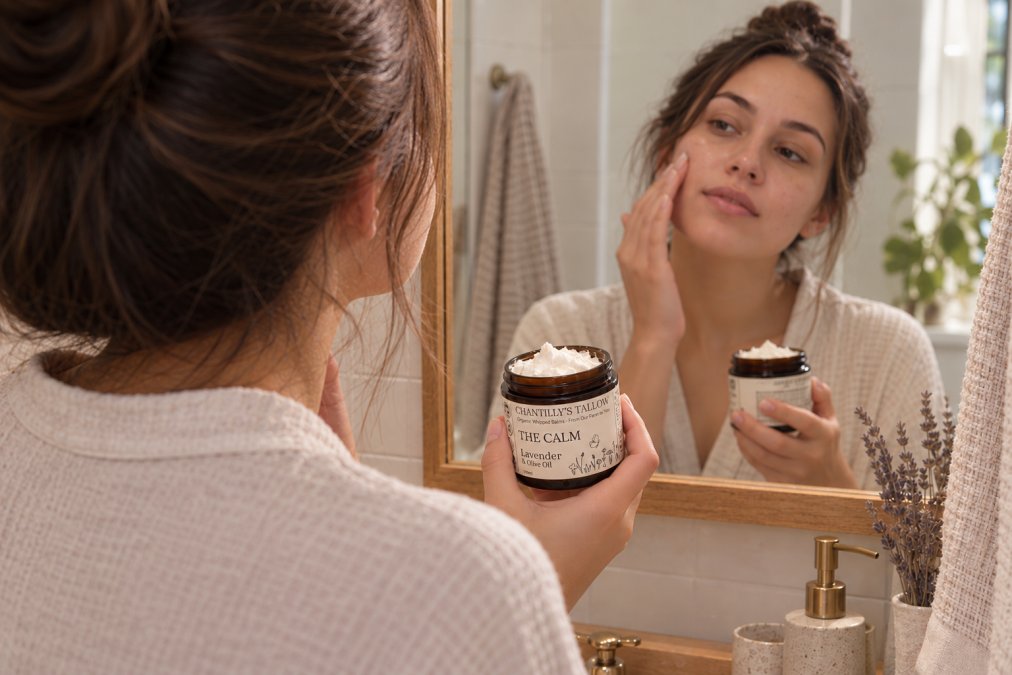
Hands holding a small jar of non comedogenic tallow balm by a mirror
Comedogenic rating is a lab measure of how quickly an ingredient blocks a pore in controlled testing, not a prediction of what happens on your face. So is tallow non comedogenic? Mostly, yes: its fatty acid profile closely resembles the lipids your skin already produces, so a balm matching your barrier chemistry is less likely to trigger the pore blockage synthetic additives sometimes cause.
Tallow Skincare for Sensitive Skin: Who Should Try It
Tallow skincare for sensitive skin works best for damaged, reactive, or stripped barriers, if your skin stings, flakes, or flushes easily, a simple tallow balm gives it fewer things to react to. Chantilly's Tallow makes balms from 100% grass-fed, organically-raised beef tallow, handcrafted in small batches on a Gippsland farm, so there are fewer ingredients and fewer triggers for inflamed skin.
Who tends to do well: eczema and dermatitis-prone skin that reacts to fragrance and preservatives; reactive skin over-treated with acids and exfoliants; older skin losing elasticity; anyone wanting a minimalist routine. Who should patch test first: very oily, acne-prone skin, since tallow is an emollient and occlusive and can feel heavy on skin that already produces plenty of sebum.
Tallow vs Jojoba Oil for Face: Which Suits Your Skin
Tallow vs jojoba oil for face comes down to one thing: jojoba is a liquid wax that mimics sebum, while tallow is a solid fat that rebuilds the barrier. Jojoba suits oily and combination skin; tallow suits dry, damaged, and sensitive skin. Jojoba is lighter and absorbs fast, which is why acne-prone skin often tolerates it, while denser, more occlusive tallow holds moisture in and supports repair, if your skin is tight and cracked, jojoba won't be enough alone.
Whipped tallow takes this a step further: whipping air into the same fat gives it a lighter, fluffier consistency than a dense, solid tallow balm, so it feels less heavy going on and spreads more easily across the skin. The fat content doesn't change, though, so a little still goes a long way, a pea-sized amount is usually enough to moisturize the whole face, let it melt in rather than piling on more.
How to Store Tallow Balm
How to store tallow balm determines how long it stays good: keep it cool, dark, and sealed, because heat and light break down the fats and shorten shelf life fast. Store your balm below 28°C, away from direct sunlight and steamy bathrooms, a cupboard or cool shelf is ideal, and in hot weather the fridge is fine, since tallow firms up and softens again on contact with skin. Shelf life under these conditions runs around 12 months unopened and 6 to 9 months once opened; always use clean, dry fingers or a small spatula, since water in the jar turns a good balm rancid.
The Bottom Line
Tallow is largely non-comedogenic, and for damaged or sensitive skin it often outperforms lighter oils because it matches your barrier's own chemistry. Patch test, store it cool, and give it a few weeks.
Frequently Asked Questions
Does beef tallow really clog pores?
Tallow's comedogenic rating sits around 2 on a 0-5 scale, so it is unlikely to clog pores for most people. Its fatty acid profile includes oleic and linoleic acid, plus saturated fats that closely match human sebum. That similarity helps tallow absorb rather than sit on the surface. However, individual reactions vary, so always patch test a small area first, especially if you have acne-prone skin or a history of breakouts.
Is tallow ok for acne-prone skin?
Many people with acne-prone skin tolerate tallow well because it supports the skin barrier without heavy synthetic additives. The key is sourcing: grass-fed, minimally processed tallow from a farm like Chantilly's Tallow retains its natural lipid profile. Start with a thin layer on one area and monitor for congestion over two weeks. If you notice new comedones, pause use and consult a dermatologist. Tallow is not a treatment for active acne, but it can work as a nourishing moisturiser for some.
What are the disadvantages of tallow?
Tallow can feel heavy on very oily skin, and its earthy scent may not suit everyone. Some people react to high oleic acid content with congestion. Storage matters too: keep it cool and dry, and use within 12 months of opening to avoid rancidity. If you are sensitive to animal-derived ingredients or follow a vegan routine, tallow is not suitable. Always patch test and check the rendering process, since poorly processed tallow may contain impurities. If your skin has reacted to everything else, the problem is usually the formula, not your face. Chantilly's Tallow makes small-batch balms from 100% grass-fed, organic tallow, bio-compatible with human skin and free from synthetic additives. Learn more about tallow's benefits and start with a single jar.