 ultimate-guide
Can Tallow Cause Acne? What You Need to Know
Table of Contents
- What Is Beef Tallow Skincare and Why It's Gaining Attention
- The Comedogenic Rating of Beef Tallow Explained
- Tallow vs Almond Oil for Face: Which Clogs Pores Less?
- How Tallow Affects Acne-Prone and Oily Skin
- How to Patch Test Tallow Balm Safely
- Processing Methods, Ingredient Synergy, and Skin Barrier Repair
- Signs Tallow Is Causing Breakouts and When to Stop
- Frequently Asked Questions
Last Updated: September 13, 2026
What Is Beef Tallow Skincare and Why It's Gaining Attention
Beef tallow skincare is the use of rendered beef fat as a moisturiser, cleanser, or balm, and it has moved from farmhouse remedy to mainstream shelf in a few short years. This guide from Chantilly's Tallow answers the question we get asked more than any other: can tallow cause acne?
The short answer is that it can, for some people. Tallow is rich in oleic acid, a fatty acid that tends to feel heavy and can sit on the surface of acne-prone skin rather than sinking in. That is not a flaw in the ingredient, it is a property you need to match to your skin.
Most guides treat tallow as either a miracle cure or a pore-blocking villain. The truth sits in the middle, and depends on your skin chemistry, the processing method, and how you apply it.
Below, we'll cover the comedogenic rating of beef tallow, how to patch test tallow balm, and the signs that it is time to stop.
The Comedogenic Rating of Beef Tallow Explained
The comedogenic rating of beef tallow is generally placed around 2 on a scale of 0 to 5, where 0 is non-comedogenic and 5 is highly pore-clogging. That mid-range score is why opinions split so sharply.
A rating of 2 means tallow is unlikely to clog most people's pores, but it is not a guarantee. Comedogenicity scales are imperfect: they were largely developed using rabbit ear testing, and human skin does not always respond the same way. The scale also says nothing about how a fat behaves once blended with other ingredients.
What drives tallow's score is its lipid profile: oleic, stearic, and palmitic acids, plus smaller amounts of linoleic acid. Oleic acid is the one to watch if you are acne-prone, because it can feel occlusive and heavy. Linoleic acid, which acne-prone skin often lacks, is the more helpful player.
Processing matters here, and it is the angle most articles skip. A gently rendered, unrefined tallow keeps more of its natural fatty acid balance. Over-refined or heavily deodorised fat can behave differently on the skin. If you are choosing a balm, ask how the fat was rendered.
Tallow vs Almond Oil for Face: Which Clogs Pores Less?
Our cold-pressed organic sweet almond oil is the lighter starting point if your main worry is clogged pores. It is a fast-absorbing liquid oil that sinks in without leaving the heavier film that pure tallow can leave on acne-prone skin.
Tallow and almond oil are not really competing for the same job on their own, but blended together they cover both needs at once. Almond oil is a light, fast-absorbing oil that suits daily use on oily or acne-prone skin; tallow is a solid fat that shines as a barrier balm, especially in cold, dry conditions or on compromised skin. That is why our Lush & Lux Whipped Tallow Balm blends cold-pressed organic sweet almond oil straight into the tallow, rather than pairing it with olive oil the way our other balms do: for acne-prone and oily skin, the almond oil keeps the blend lighter and less likely to clog pores than an olive-oil-based balm.
Factor | Beef Tallow | Almond Oil |
|---|---|---|
Comedogenic rating | Around 2 | Low, fast-absorbing |
Texture | Solid, rich balm | Light, fast-absorbing liquid oil |
Dominant fatty acid | Oleic acid | Oleic and linoleic acid |
Best for | Dry, cracked, barrier-damaged skin | Oily and acne-prone skin |
Acne risk | Higher for oily types | Lower for most types |
The practical takeaway: if you have oily or acne-prone skin, our Lush & Lux Whipped Tallow Balm is the balm to reach for, since it blends cold-pressed organic sweet almond oil with the tallow instead of the olive oil used in our other balms, keeping the feel lighter on congested skin. If your skin is dry, tight, or reactive and clogging is less of a concern, our olive-oil balms work just as well.
The comparison most guides skip: what else is in the jar
A comedogenic rating tells you about one ingredient in isolation, not the finished balm. In practice, the ingredient most likely to trigger a breakout in a tallow product is often not the tallow at all, it is what the tallow has been blended with.
Three common culprits sit alongside tallow in store-bought balms:
- Beeswax and other waxes. These give a balm structure and staying power, but they sit high on the comedogenic scale and form a firmer film than tallow alone. A balm that feels waxy rather than oily is worth scrutinising.
- Essential oils and fragrance. Citrus, lavender, peppermint, and eucalyptus are frequent additions and a common source of contact irritation that can look identical to a breakout, small bumps, redness, and roughness along the application area.
- Heavy carrier blends. A balm built on tallow plus coconut oil, cocoa butter, or wheat germ oil stacks several higher-comedogenic fats together. The tallow gets blamed; the blend is the problem.
This is why a patch test on the finished product matters more than any single rating. If a balm breaks you out, look at the full ingredient list, not just the fat at the top of it.
Complementary ingredients that usually help
When a balm is formulated with acne-prone skin in mind, the supporting cast tends to be lighter. Cold-pressed organic sweet almond oil, olive oil, jojoba, and macadamia are common partners: almond oil is a fast-absorbing, low-comedogenic oil that suits acne-prone skin especially well, jojoba lightens the feel and mimics sebum, macadamia adds silky slip without heaviness, and olive oil contributes its own fatty acid profile and a more fluid texture. A well-formulated balm built on these is often easier on congested skin than a jar of straight tallow.
When comparing two tallow balms, read the label in this order: tallow first, then supporting oils, then anything added for scent or structure. The further down the list the waxes and essential oils sit, the lower your risk is likely to be.
How Tallow Affects Acne-Prone and Oily Skin
Tallow can worsen acne in people who already have oily, congested skin, largely because of how occlusives interact with sebum. Layering a heavy fat over skin already producing plenty of oil can create an environment where dead cells and bacteria are more easily trapped.
Here is the mechanism in plain terms. Tallow forms a breathable seal on the skin, exactly what makes it so good at reducing transepidermal water loss. But on acne-prone skin, the same seal can slow the natural shedding of dead skin cells, which then build up inside the follicle.
Oleic acid plays a role too. It is a larger, heavier fatty acid that can disrupt the skin barrier in some people at high concentrations, increasing inflammation rather than calming it. This is why a product that soothes one person's dermatitis can trigger another person's breakouts.
The skin microbiome matters as well. An occlusive layer can create conditions where bacteria such as C. acnes thrive, particularly if you apply tallow over unwashed skin or reuse contaminated fingers in the jar.
None of this means tallow is off-limits for acne-prone skin. It means the risk is real and worth respecting.
How to Patch Test Tallow Balm Safely
Patch testing is the single most useful thing you can do before committing a tallow balm to your face. It takes under a week and tells you more than any review.
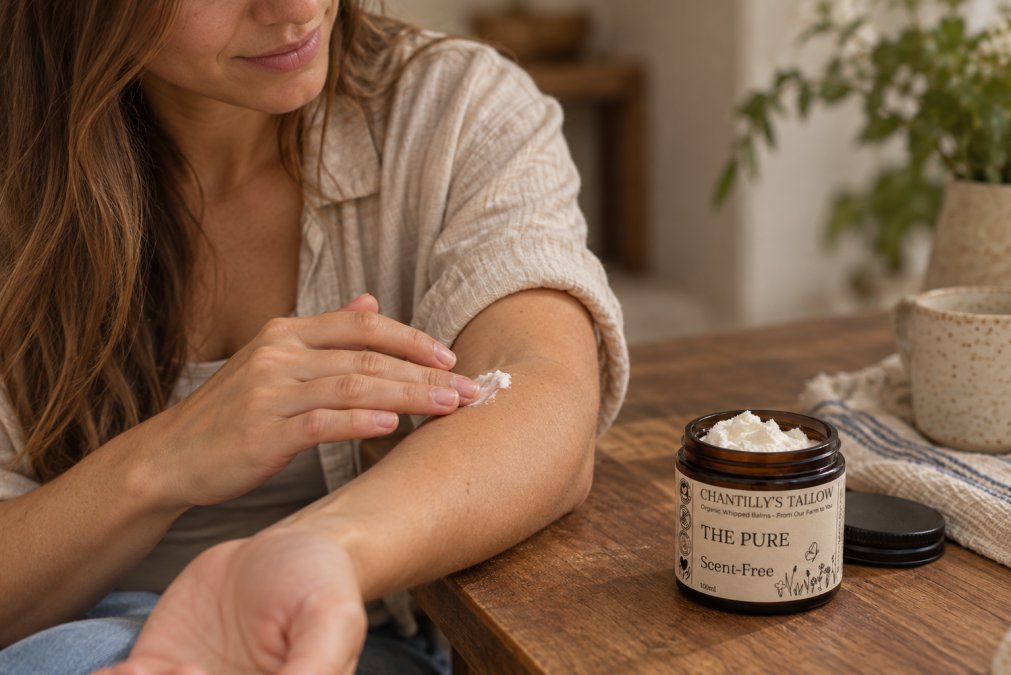
Follow these steps:
- Choose the right spot. Apply a small amount to the inner forearm or behind the ear, not your face. These areas are sensitive but easy to monitor.
- Start with a tiny amount. A pea-sized dot is plenty. Less is genuinely more with tallow.
- Apply twice daily for three days. Keep the area clean and avoid other new products on that patch.
- Watch for a reaction. Redness, itching, or small bumps within 24 to 48 hours suggest sensitivity, not necessarily acne.
- If the patch is clear, move to the jawline. Test a small area of your face for another three to five days before going full-face.
- Introduce one product at a time. If you change three things at once, you will never know what caused a breakout.
A common mistake is testing on the face first because that is where you want results. If your skin reacts badly, you now have a breakout in the most visible place. Be patient with the forearm.
Processing Methods, Ingredient Synergy, and Skin Barrier Repair
How a tallow balm is made and what it is blended with changes its behaviour on your skin, often more than the tallow itself, the part most reviews ignore.
Rendering method and purity
Rendering is the process of melting and purifying raw fat. How gently it is done affects what survives in the finished product.
- Gently rendered, unrefined tallow keeps more of its natural fatty acid balance and fat-soluble vitamins. It also retains a slight beef scent, which is why some producers deodorise it.
- Highly refined or deodorised tallow is more uniform and neutral-smelling, but the processing strips some of the compounds that make tallow interesting in the first place. It can also behave differently on the skin.
Purity matters for a second reason: leftover impurities from a poor render can irritate skin on their own, independent of the fat's comedogenic rating. If a product lists no rendering method, that is a gap worth asking about.
Ingredient synergy: the real breakout suspects
Pure tallow is heavy, and blending it with lighter oils changes the texture and the pore-clogging risk. Sweet Almond Oil, Olive oil, jojoba, and macadamia are common partners: jojoba lightens the feel, macadamia adds silky slip, and olive oil contributes its own fatty acid profile. A well-formulated balm is often easier on acne-prone skin than a jar of straight tallow.
But synergy cuts both ways. Waxes, essential oils, and heavy carrier blends are frequent additions that raise the risk profile of an otherwise gentle balm. When troubleshooting a reaction, work through the ingredient list in order of comedogenic and irritant potential, not prominence.
Using tallow for barrier repair without triggering acne
This is the real reason people keep coming back to tallow. Tallow is bio-compatible with human skin cell structure, which is why it supports skin barrier repair so effectively. A damaged barrier leaks water and lets irritants in, and that cycle drives both dryness and inflammation. For skin that is dry and reactive rather than oily and congested, tallow can genuinely help.
The distinction matters: tallow is a barrier-repair ingredient, not an acne treatment. If your main concern is active breakouts, it is the wrong tool. But if your barrier is damaged and you still want to use tallow, the risk can be managed with a few deliberate choices:
- Apply to dry zones only. Cheeks, jaw edges, and around the eyes tolerate tallow far better than the T-zone. Keep it off the forehead, nose, and chin unless your skin there is genuinely dry.
- Use a thin layer, not a scoop. Warm a small amount between fingertips and press it in. A sheen is enough; a visible film is too much.
- Start at two or three nights a week. Build tolerance before going nightly. Frequency, not just quantity, drives congestion.
- Apply to clean skin. Sealing over unwashed skin traps oil, dead cells, and bacteria under the balm.
- Skip it on active breakouts. Apply around inflamed spots, never over them.
- Pair it with a gentle routine. A rich balm layered over strong exfoliating acids or retinoids can tip reactive skin into irritation.
Used this way, tallow can support a compromised barrier without becoming the thing that clogs it. Treat it as a targeted repair step, not an all-over moisturiser for acne-prone skin.
Storage and shelf life
Tallow is a perishable fat, so storage is part of the barrier-repair picture. Keep your balm in a cool, dark place, ideally below 28°C, and out of direct sunlight. An unopened, well-made balm typically holds its quality for around 12 months; once opened, aim to use it within 6 months. A balm that has gone rancid smells sharp and can irritate skin on its own. If you live somewhere warm, the fridge is a perfectly good home for it.
Australian College of Dermatologists guidance on skin conditions
Signs Tallow Is Causing Breakouts and When to Stop
Knowing when to stop is a skill, and it is where the "transition period" myth causes the most damage. Some guides tell you breakouts in the first few weeks are just your skin "purging". Purging is real, but it is tied to active exfoliating ingredients that speed up cell turnover, not to a moisturising balm.
If a new tallow product causes breakouts, that is most likely congestion, not purging. Stop using it.
Watch for these signs:
- New blackheads or whiteheads in areas where you applied the balm
- Small, uniform bumps along the jaw, hairline, or cheeks
- Cystic spots appearing within one to two weeks of starting
- Clogged follicles that feel rough to the touch
- Persistent redness or irritation that does not settle
If you see any of these, pause the product for two weeks and let your skin settle. If you try again, use less and apply only to dry areas such as the cheeks and around the eyes, avoiding the T-zone entirely.
Tallow is a genuinely useful ingredient for dry, damaged, and reactive skin, but it is not the right fit for everyone, and acne-prone skin deserves an honest warning rather than a sales pitch. If you want a balm made from 100% grass-fed, organically-raised beef tallow, handcrafted in small batches and blended for real skin, Chantilly's Tallow is worth a look. Our bio-compatible formulas support barrier repair and moisture re-balancing, with no synthetic additives and full transparency about how each batch is made. Start with a patch test, go slowly, and let your skin tell you what it needs.
Frequently Asked Questions
Why do dermatologists not recommend tallow?
Many dermatologists avoid recommending tallow because its high oleic acid content gives it a comedogenic rating around 2, meaning it can clog pores for some people. There is also limited clinical research on tallow for acne-prone skin compared to established ingredients. However, dermatological opinion is not unanimous, and some practitioners acknowledge tallow's emollient and barrier-supporting properties. If you have acne-prone or oily skin, it is worth discussing tallow with your dermatologist before adding it to your routine.
Does tallow clog pores?
Tallow can clog pores for some people because it is an occlusive ingredient with a moderate comedogenic rating. Its fatty acid profile, particularly oleic acid, may contribute to pore-clogging in acne-prone individuals. That said, comedogenicity varies by person and by how the tallow is processed and formulated. Grass-fed, minimally processed tallow combined with lighter oils may be less likely to clog pores than heavier, highly refined versions. Patch testing is the most reliable way to find out how your skin responds.
Why do some people experience breakouts when using tallow?
Breakouts from tallow can happen for a few reasons. First, tallow's occlusive nature may trap sebum and bacteria in clogged follicles, especially if you are applying too much or using certain tallow blends less suitable to oily or acne-prone skin. Second, certain processing methods or added ingredients in a balm can trigger sensitivity. If breakouts persist beyond a few weeks or worsen, stop using the product and consult a dermatologist.
Is grass-fed tallow better for acne-prone skin than synthetic moisturisers?
Grass-fed tallow contains a lipid profile closer to human sebum, which may help support the skin barrier and reduce transepidermal water loss. However, synthetic moisturisers are often formulated to be non-comedogenic and hypoallergenic, which can make them a safer choice for acne-prone skin. There is no clear winner for everyone. If you want to try grass-fed tallow, choose a minimally processed product, patch test first, and monitor your skin for clogged follicles or inflammation.