 ultimate-guide
Benefits of Tallow for Skin: Grass-Fed Guide
Table of Contents
- What Is the Fatty Acid Profile of Grass-Fed Tallow?
- Tallow Balm Shelf Life: How Long It Lasts and How to Store It
- Tallow vs Plant Oils for Skin: Which Suits Your Concern?
- Frequently Asked Questions
Last Updated: September 17, 2026
What Is the Fatty Acid Profile of Grass-Fed Tallow?
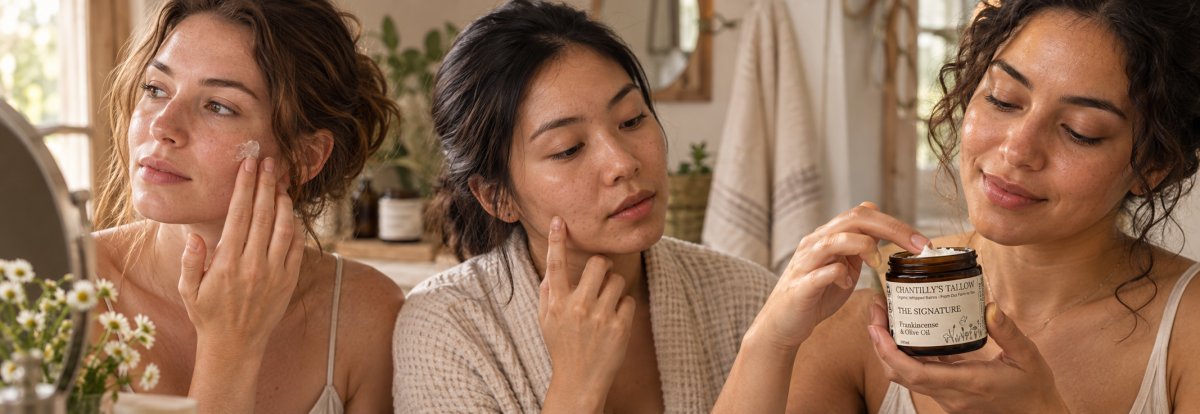
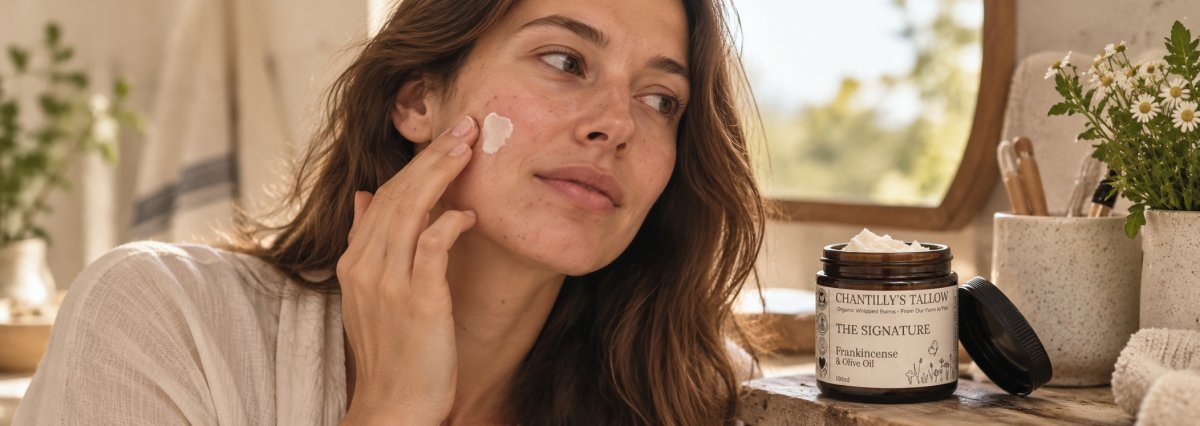
Grass-fed tallow for skin is a rendered fat whose fatty acid profile mirrors the lipids in human skin, which is why it works so well as a moisturiser. Oleic acid softens skin, while stearic and palmitic acids are occlusive, slowing transepidermal water loss. Pasture-raised fat also carries fat-soluble vitamins A, D, E, and K in a form skin can use.
Tallow Balm Shelf Life: How Long It Lasts and How to Store It
A properly made tallow balm keeps for around 12 months from the date it is made, and up to 18 months if stored well. Keep it below 28°C, ideally 15°C to 22°C, away from direct sun in a cool, dark cupboard, screw the lid down tightly, and scoop with clean, dry fingers or a small spatula. Above 28°C the balm softens, separates, and oxidises faster unless it has an addition of beeswax. A faint nutty smell is normal, but a sharp, rancid smell means it is past its best.
Tallow vs Plant Oils for Skin: Which Suits Your Concern?
Neither wins outright: tallow suits dry, reactive, and barrier-compromised skin, while plant oils suit oily, acne-prone skin that needs something lighter. The deciding factor is your skin barrier and how much occlusion it needs.
Concern | Tallow | Plant oils | Why |
|---|---|---|---|
Dry, flaky skin | Best fit | Good | Tallow's stearic and palmitic acids are strongly occlusive |
Eczema-prone skin | Best fit | Variable | Tallow's fatty acids and vitamins A, D, E, K support barrier repair |
Oily, acne-prone skin | Use sparingly | Best fit | Lighter oils like jojoba are less pore-clogging a tallow balm mixed with jojoba is best for your skin type. |
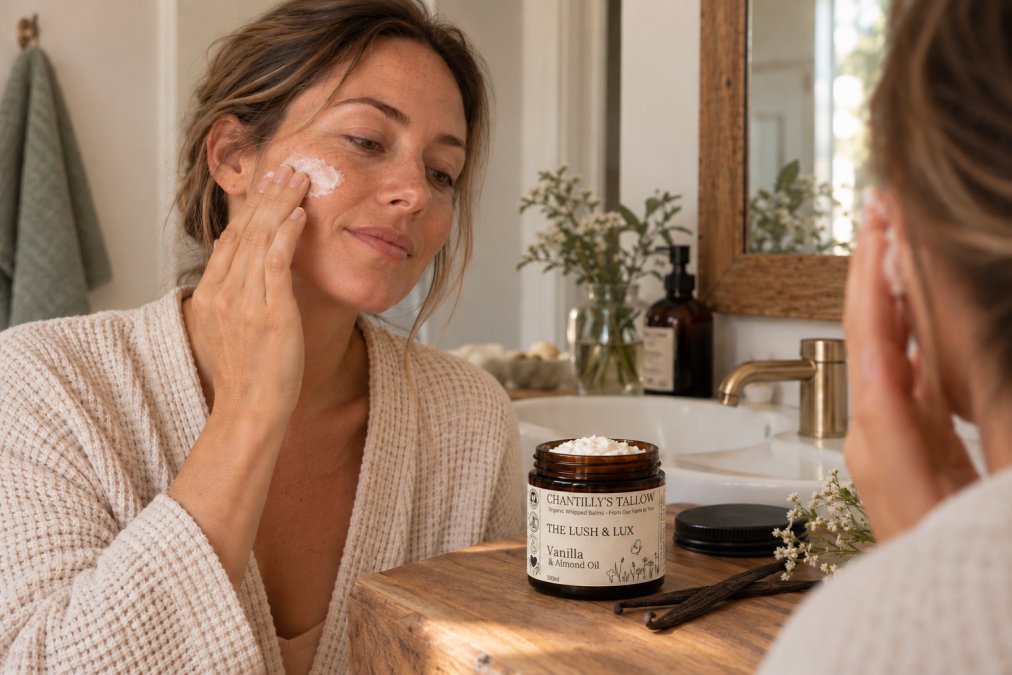
The nuance most guides skip is comedogenic risk: tallow is not inherently pore-clogging, but it is rich, so use a thin layer on an oily face and build up. Rather than mixing your own, look for a blend that already combines them: Chantilly's Tallow makes its balms with jojoba, macadamia, and olive oil alongside the tallow. Tallow for skin is not a replacement for a full routine, it is a foundational one; applied to clean, slightly damp skin, it seals in hydration and supports the barrier.
If you have spent years cycling through products that promise relief and deliver irritation, the missing piece is often biocompatibility, not another active. Chantilly's Tallow handcrafts small-batch balms from 100% grass-fed, organically-raised beef tallow on our Gippsland farm, formulated to be bio-compatible with your skin's own cell structure, then sent direct from farm to skin with no middlemen.
Frequently Asked Questions
Is tallow actually good for your face?
Yes, tallow for skin can be beneficial because its fatty acid profile closely resembles human sebum, making it a biocompatible emollient. It helps reinforce the skin barrier, reducing transepidermal water loss and supporting elasticity. Many people with dry, reactive or eczema-prone skin find it soothing. However, if you are prone to severe acne or have very oily skin, patch-test first, as tallow is occlusive and may feel heavy. It is not a replacement for dermatological treatment, but a natural moisturiser that works with your skin's lipid profile.