 ultimate-guide
Does Tallow Help Fine Lines? What the Science Says
Table of Contents
- Does Tallow Help Fine Lines? A Straight Answer
- How Tallow's Fatty Acid Profile Affects Skin Elasticity
- Tallow vs. Retinoids: Different Paths to Smoother Skin
- Why Tallow Balm for Dry Skin Reduces the Look of Lines
- Building a Tallow Skincare Routine for Mature Skin
- Sourcing and Quality Standards: Grass-Fed Matters
- Tallow Balm Shelf Life and Proper Storage
- The Bottom Line on Tallow for Fine Lines
- Frequently Asked Questions
Last Updated: September 6, 2026
Does Tallow Help Fine Lines? A Straight Answer
Yes, tallow can help soften the appearance of fine lines, but not for the reason most people assume. Tallow is a deeply occlusive moisturiser, meaning it forms a protective barrier on the skin that dramatically reduces transepidermal water loss. When fine lines are caused by dehydration, plumping the skin with moisture makes those lines less visible. At Chantilly's Tallow, we explain the difference between true structural repair and cosmetic improvement.
The honest answer is that tallow does not erase wrinkles or rebuild collagen the way retinoids can. What it does exceptionally well is support the skin barrier, which is the foundation of healthy, resilient skin. A well-hydrated barrier reflects light more evenly, smooths skin texture, and makes fine lines look softer. DermNet NZ's guide to moisturisers and skin barrier function confirms that occlusive ingredients are the most effective class of moisturiser for reducing water loss. Tallow is naturally rich in these occlusive fatty acids, which is why it performs so well for dry, mature skin.
How Tallow's Fatty Acid Profile Affects Skin Elasticity
Most articles on tallow for skin stop at 'it contains fatty acids.' The more useful question is which fatty acids, in what ratios, and why that matters for mature skin. Tallow's composition is roughly 40-50% oleic acid (a monounsaturated omega-9), 25-30% palmitic acid (a saturated fat), 15-25% stearic acid (another saturated fat), and 2-4% linoleic acid (an omega-6). That profile is strikingly close to the lipid matrix of human stratum corneum, which is why tallow is often described as biomimetic rather than merely bioavailable.
Oleic acid acts as a penetration enhancer. It slips between the corneocytes, the flattened dead cells of the outer skin layer, and helps carry other lipid-soluble compounds deeper. Stearic acid is strongly occlusive; it sits on the surface and forms a water-resistant film that slows transepidermal water loss. Palmitic acid contributes structural stiffness to the barrier, while linoleic acid is a precursor to ceramides, the 'mortar' that holds skin cells together. When ceramide levels drop with age, the barrier leaks moisture and fine lines look deeper. Topical linoleic acid gives the skin raw material to replenish those ceramides.
Skin elasticity itself is governed by collagen and elastin fibres in the dermis, which tallow cannot reach. No topical fat can rebuild those fibres. But elasticity is also influenced by the hydration state of the epidermis. A well-hydrated stratum corneum is more pliable and reflects light evenly, which is why dehydrated skin looks crepey and dull. Tallow improves that superficial elasticity by restoring the lipid barrier, reducing the appearance of fine lines without claiming to alter the underlying dermal structure.
A common pattern in dermatology is that barrier disruption triggers a low-grade inflammatory cascade that accelerates collagen breakdown. By keeping the barrier intact, tallow indirectly reduces that chronic inflammation. This is not the same as stimulating new collagen, but it is a legitimate mechanism for slowing further visible ageing. The distinction matters: tallow is a supportive, preventative ingredient, not a structural repair agent.
One caveat worth noting is that oleic acid, despite its penetration-enhancing role, can disrupt barrier function if applied in excess. This is why formulation and quantity matter. A thin layer of tallow supports the barrier; a thick, greasy layer can trap heat and sebum, potentially worsening congestion in acne-prone skin. For mature skin, the goal is a light, even film that absorbs within a few minutes, not a visible residue.
Tallow vs. Retinoids: Different Paths to Smoother Skin
Retinoids work by accelerating cellular turnover, pushing fresh cells to the surface and stimulating collagen production. Tallow works by fortifying the barrier and locking in moisture. These are fundamentally different mechanisms, and understanding that difference prevents disappointment.
Retinoids deliver structural change but often cause irritation, dryness, and peeling during the adjustment period. Tallow delivers cosmetic improvement through hydration with virtually no irritation. For many people over 40, the skin cannot tolerate daily retinoid use. A tallow balm for dry skin offers a gentler alternative that still visibly improves the look of fine lines. Some people use both, applying retinoids at night and tallow as a buffer or daytime moisturiser.
The real difference comes down to what your skin can tolerate. If you have sensitive or reactive skin, tallow is the more sustainable long-term choice because you will actually use it consistently. A retinoid you stop using after three weeks delivers zero results.
Why Tallow Balm for Dry Skin Reduces the Look of Lines
Dehydrated skin looks older than it is. When the stratum corneum lacks water, it shrinks and accentuates every fine line. Tallow balm for dry skin addresses this directly by providing both emollient and occlusive benefits. The emollient fatty acids fill the gaps between skin cells, while the occlusive layer prevents the moisture from escaping.
This dual action is why results appear relatively quickly. Within days, skin often looks plumper and lines appear less pronounced. The effect is temporary, lasting as long as you maintain the routine, but for many people that is exactly what they want from a daily moisturiser. Tallow also contains vitamins A, D, E, and K in their natural, bioavailable forms, which support overall dermal health without the irritation of concentrated synthetic versions.
Building a Tallow Skincare Routine for Mature Skin
Start with clean, slightly damp skin. Apply a small amount of tallow balm to your fingertips and warm it between your fingers for a few seconds. It melts quickly at body temperature. Press it gently into your face and neck rather than rubbing vigorously, and allow it to absorb for a few minutes before applying makeup or sunscreen.
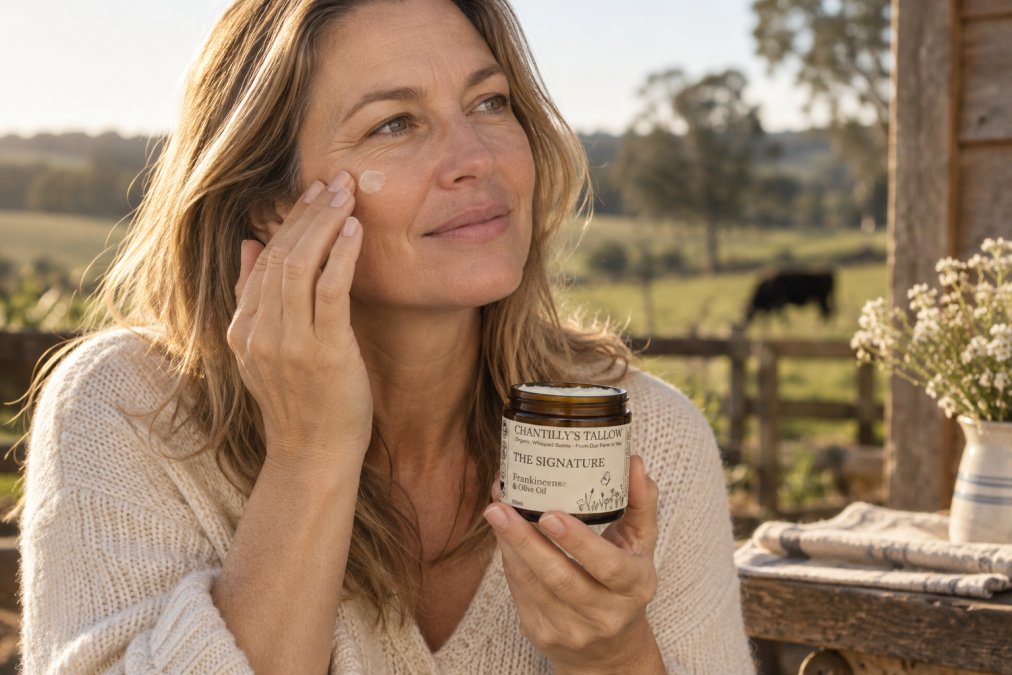
For mature skin, consistency matters more than quantity. A pea-sized amount is enough for the whole face. Use it morning and night. In the morning, follow with SPF. At night, you can layer it over a hydrating serum. Tallow sits well over water-based products but should be the final step, since its occlusive nature means nothing penetrates through it easily.
A common mistake is applying too much. Tallow is rich, and a heavy layer can feel greasy and sit on the surface. Start with less than you think you need and build up only if your skin feels tight. A tallow skincare routine for mature skin is simple: cleanse, hydrate, seal with tallow, and protect during the day.
What Not to Layer With Tallow
Because tallow is occlusive, it seals whatever is underneath it, including ingredients that should not be sealed in. Avoid applying tallow over strong active serums containing glycolic acid, salicylic acid, or high-strength vitamin C. Occlusion increases their penetration and can trigger irritation, redness, or chemical burns, particularly on sensitive mature skin. If you use a leave-on exfoliant or a prescription retinoid at night, apply it first, wait 20 to 30 minutes for it to absorb fully, then apply a thin layer of tallow as a buffer. This sequencing reduces retinoid irritation without blocking its activity.
Silicone-based primers and heavy foundations can also interfere with tallow. Silicones form their own film that prevents tallow from spreading evenly, leading to pilling. If you wear makeup, apply tallow, wait five minutes, then use a water-based primer and lightweight foundation. Alternatively, reserve tallow for your evening routine and use a lighter moisturiser under makeup during the day.
Where Tallow Fits in a Multi-Step Routine
The order matters. A functional routine for mature skin looks like this:
- Cleanse with a gentle, non-foaming cleanser that does not strip the barrier.
- Hydrate with a water-based serum or toner containing glycerin, hyaluronic acid, or panthenol. Tallow locks in this water; without it, tallow alone cannot add water to the skin.
- Treat with any targeted products (retinoids, peptides, or antioxidants) and allow them to absorb.
- Seal with tallow as the final step.
- Protect with SPF 50+ in the morning, applied after tallow has settled.
Adjusting for Climate and Season
Tallow behaves differently depending on your environment. In humid Australian summers, a single thin application at night may be sufficient. In dry winters or air-conditioned environments, you may need a slightly thicker layer or a second application on particularly dry areas like the cheeks and around the eyes. Some people find that tallow alone is not enough in very dry climates and prefer to mix a drop of tallow into their moisturiser rather than using it as a standalone layer. This hybrid approach still provides occlusion while allowing the water-based product to deliver hydration.
A Note on Eye Area Use
The skin around the eyes is thinner and more delicate than the rest of the face. Tallow can be used there, but with caution. Apply a tiny amount, roughly the size of a grain of rice, with your ring finger, dabbing gently along the orbital bone rather than dragging the product across the eyelid. If you are prone to milia, the small white cysts that form when dead skin becomes trapped, test tallow on a small area first. Some people find rich occlusives trigger milia around the eyes, while others tolerate them without issue.
Sourcing and Quality Standards: Grass-Fed Matters
The quality of tallow depends entirely on the quality of the animal and the rendering process. Tallow from 100% grass-fed, organically raised cattle contains higher levels of beneficial nutrients than tallow from grain-fed animals. Grass-fed tallow also has a cleaner, less greasy feel on the skin, which makes it more pleasant to use daily.
Look for tallow from animals raised on 100% pasture without synthetic hormones or routine antibiotics. The rendering process matters too. Low-heat, small-batch rendering preserves the nutrient profile, while industrial high-heat processing can degrade the fats. Ask sellers about their farming practices and rendering methods. Transparent producers will share these details openly.
This is where Chantilly's Tallow stands apart. Our tallow comes from cattle raised on our own farm in Gippsland, so we control every step from pasture to pot. We use ethical, sustainable farming practices and handcraft everything in small batches. You are not buying from a middleman; you are buying directly from the people who raised the animals and made the product.
Tallow Balm Shelf Life and Proper Storage
Tallow is remarkably stable compared to plant oils because its fatty acid profile resists oxidation. An unopened tallow balm can last for years when stored properly. Once opened, a typical balm remains fresh for 12 to 18 months, though you should always check the specific product label for guidance. Store your tallow balm away from direct sunlight and heat. A cool, dark cupboard or bathroom cabinet works well. If you live in a warm climate and the balm melts, that is normal; it will re-solidify at room temperature without losing effectiveness. Unlike water-based moisturisers, tallow does not require preservatives, which makes it a cleaner option for sensitive skin.
Store your tallow balm away from direct sunlight and heat. A cool, dark cupboard or bathroom cabinet works well. If you live in a warm climate and the balm melts, that is normal; it will re-solidify at room temperature without losing effectiveness. Unlike water-based moisturisers, tallow does not require preservatives, which makes it a cleaner option for sensitive skin.
One sign of rancidity is an off, sharp smell. Fresh tallow has a very mild, neutral scent. If yours develops a strong odour, discard it. Proper storage prevents this, and a well-kept balm will serve you for well over a year.
The Bottom Line on Tallow for Fine Lines
Tallow is not a miracle anti-ageing product, and no single product should replace your entire skincare routine. What tallow offers is exceptional, natural hydration that softens the appearance of fine lines by supporting your skin barrier. For people with dry, sensitive, or mature skin, it is one of the most effective moisturisers available.
The scientific reality is straightforward: hydrated skin looks younger. Tallow delivers deep, lasting hydration through a composition remarkably similar to your own skin lipids. If you are looking for a natural, gentle way to improve skin texture and reduce the look of fine lines without irritation, tallow is worth trying.
At Chantilly's Tallow, we craft small-batch balms from 100% grass-fed, organically raised beef tallow, made on our own Gippsland farm. Our formulas are bio-compatible with human skin, safe for all ages, and free from synthetic additives. If you want to experience the difference of honest, farm-to-skin skincare, explore our range and find the balm that suits your routine.
Fine lines are a normal part of ageing, but dry, tight skin does not have to be. Chantilly's Tallow offers handcrafted, grass-fed tallow balms that deeply nourish and support your skin barrier, helping you maintain a healthy, comfortable complexion. Our small-batch products are made with organic ingredients and ethical farming practices, so you can care for your skin and the planet at the same time. Find Your Balm and see what natural, bio-compatible skincare feels like.
Frequently Asked Questions
Does beef tallow make your wrinkles go away?
Tallow does not erase wrinkles, but it can reduce their appearance. Fine lines often look deeper when the skin barrier is dehydrated. Tallow's fatty acids and vitamins A, D, and E help restore the lipid barrier, which plumps the skin and smooths texture. Most people notice softer, more hydrated skin within a few weeks of daily use. For deep wrinkles, tallow works best alongside other strategies rather than as a replacement for medical treatments.
Why don't dermatologists like tallow?
Dermatologists tend to recommend products with clinical trial data. Tallow has limited formal research, so many are cautious about recommending it. Some also worry about comedogenic potential, though high-quality, grass-fed tallow is generally considered low risk. The concern is less about the ingredient itself and more about the lack of standardised testing. If you see a dermatologist, ask about using an occlusive moisturiser to support your skin barrier.
How long does it take for beef tallow to work on fine lines?
Expect to wait two to four weeks of consistent use before noticing visible changes. Tallow works by restoring the skin barrier and reducing transepidermal water loss, which helps skin look plumper and more hydrated. Fine lines caused by dryness respond fastest. Lines from collagen loss take longer and may only soften slightly. Apply a thin layer twice daily to clean, damp skin to speed up results.
Can tallow balm be used as part of a daily anti-ageing routine?
Yes. Use tallow balm as the final step in your evening routine to seal in moisture. Apply it after water-based serums while skin is still damp. In the morning, use a small amount if your skin feels dry. Tallow layers well under sunscreen, but apply the SPF first and let it settle. Patch test first, especially if you have acne-prone skin, and start with every second night.