 comparison
Tallow Alternatives for Eczema: Natural Options Compared
Table of Contents
- Why People Seek Tallow Alternatives for Eczema
- Grass-Fed Tallow Balm for Eczema: How It Works
- Tallow vs Plant-Based Oils for Eczema: Key Differences
- Store-Bought Eczema Creams: Conventional Options
- Tallow Balm Shelf Life and Storage Conditions
- Safety Considerations: Patch Testing and Allergic Reactions
- Sourcing and Processing Transparency
- Which Alternative Suits Your Eczema?
- Frequently Asked Questions
Last Updated: August 31, 2026
Why People Seek Tallow Alternatives for Eczema
Eczema is a chronic inflammatory skin condition that disrupts the skin barrier, leaving it vulnerable to moisture loss and irritation. When conventional treatments fall short or trigger sensitivity, many people turn to natural alternatives, including tallow-based products and plant-derived options. The search for tallow alternatives for eczema often stems from frustration with standard pharmaceutical creams, concerns about synthetic ingredients, or a desire to explore options that align with natural skincare philosophies.
At Chantilly's Tallow, we understand this journey. Many customers arrive after years of trial-and-error with prescription treatments and commercial moisturisers. What drives the exploration of tallow alternatives for eczema isn't always dissatisfaction with tallow itself, it's often a need to find the right fit within a broader skincare strategy, or to understand how tallow compares to other natural options available.
The reality is that eczema management isn't one-size-fits-all. Some people thrive with grass-fed tallow balm. Others find plant-based oils work better for their skin chemistry. Understanding the differences between these approaches, and knowing when each makes sense, is the foundation of effective relief.
Grass-Fed Tallow Balm for Eczema: How It Works
Grass-fed tallow balm works by mimicking the skin's natural lipid profile. Tallow contains fatty acids and fat-soluble vitamins (A, D, E, K) that closely match the composition of human sebum, making it remarkably biocompatible with skin cells. When applied to eczema-prone skin, tallow acts as both an emollient and an occlusive, it softens the skin while creating a protective barrier that prevents transepidermal water loss.
The mechanism is straightforward: eczema damages the skin barrier, allowing moisture to escape and irritants to penetrate. Tallow fills microscopic gaps in the stratum corneum (the outermost skin layer) and locks in hydration. The fat-soluble vitamins in grass-fed tallow support skin healing and reduce inflammation, addressing both the symptom (dryness) and the underlying barrier dysfunction.
What sets grass-fed tallow apart from conventional moisturisers is its lipid composition. Rendered fat from grass-fed cattle contains higher concentrations of conjugated linoleic acid (CLA) and omega-3 fatty acids compared to grain-fed alternatives. This matters because eczema-prone skin often has an imbalanced lipid profile, it lacks the exact fatty acids needed to repair itself. Tallow doesn't just hydrate; it provides the raw materials for barrier restoration.
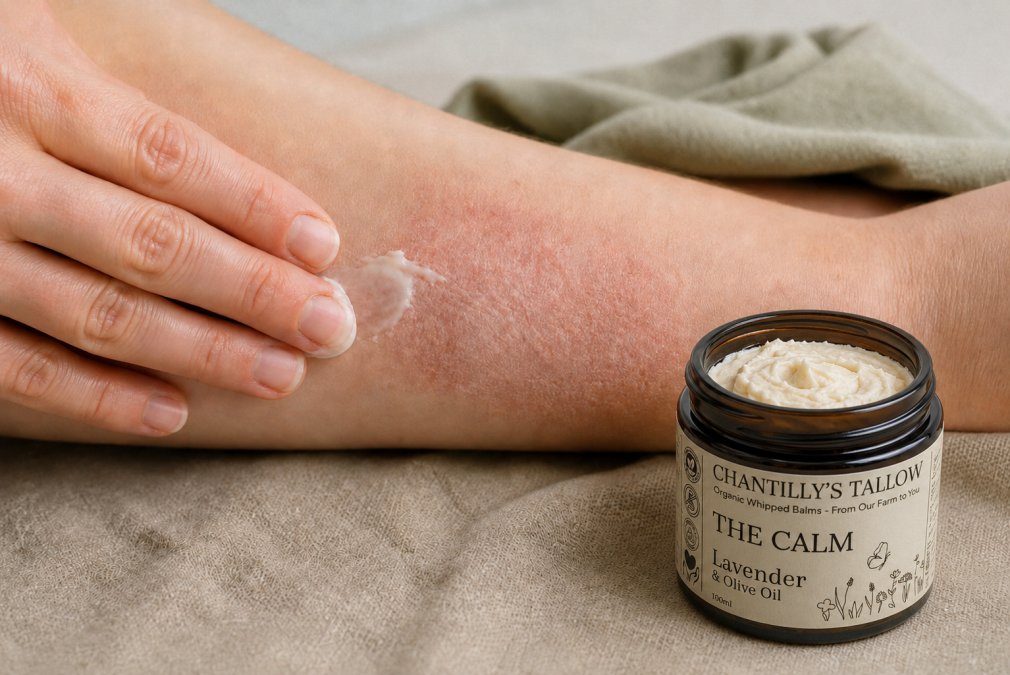
Application is simple: warm a small amount between your fingers and press it gently into damp skin. The warmth helps the balm spread without tugging on sensitive areas. Many people find that applying tallow to slightly damp skin, rather than completely dry skin, improves absorption and reduces that heavy feeling some experience with occlusive products.
Tallow vs Plant-Based Oils for Eczema: Key Differences
The choice between tallow and plant-based oils hinges on three factors: lipid profile, bioavailability, and how your skin responds to saturation levels.
Lipid Profile and Skin Barrier Support
Plant-based oils like jojoba, macadamia, and olive oil offer genuine benefits for eczema. Jojoba oil, for instance, closely resembles human sebum and absorbs quickly without leaving a greasy residue. Macadamia oil is rich in oleic acid and palmitoleic acid, both of which support skin barrier function. Olive oil provides polyphenols with anti-inflammatory properties.
However, plant-based oils have a fundamental limitation: they lack the full spectrum of fatty acids and fat-soluble vitamins present in tallow. Jojoba is predominantly monounsaturated fat; it excels at hydration but doesn't provide the diverse lipid profile that eczema-damaged skin needs for comprehensive repair. Macadamia and olive oil skew toward omega-9 fatty acids, which are beneficial but incomplete.
Tallow, by contrast, contains a balanced mix of saturated, monounsaturated, and polyunsaturated fats, plus vitamins A, D, E, and K. This diversity matters because eczema-prone skin often has multiple barrier deficiencies simultaneously. Tallow addresses more of them in a single application.
Bioavailability and Absorption
Bioavailability refers to how effectively your skin cells can actually use what you apply. Plant-based oils absorb quickly, sometimes too quickly. Jojoba oil, for example, penetrates rapidly but may not linger long enough to provide sustained occlusion, especially during sleep or extended periods without reapplication.
Tallow has slower, more sustained bioavailability. It sits on the skin longer, providing continuous barrier support over several hours. This is an advantage for overnight application or for eczema flares that require intensive, prolonged hydration. The trade-off is that tallow feels heavier initially, though this heaviness dissipates as it warms and settles into the skin.
For people with severe barrier damage, the sustained occlusion of tallow often outperforms the quick absorption of plant oils. For mild eczema or maintenance between flares, lighter plant-based options may feel more comfortable and be sufficient.
Store-Bought Eczema Creams: Conventional Options
When exploring tallow alternatives for eczema, many people also consider established pharmaceutical and cosmetic options. These fall into several categories:
Therapeutic moisturisers with ceramides: Products like MooGoo Eczema & Psoriasis Cream and QV Dermcare Eczema Daily Cream are formulated with ceramides, niacinamide, and glycerin. Ceramides are lipids naturally present in healthy skin; adding them topically helps restore barrier function. QV's formula includes lactic acid, which gently exfoliates while hydrating. These products are evidence-based, widely available in Australian pharmacies, and suitable for all ages.
Microbiome-balancing formulas: La Roche-Posay Lipikar Baume AP+M represents a newer approach, using proprietary technology to rebalance the skin's microbiome alongside providing lipid replenishment. This addresses the reality that eczema involves both barrier dysfunction and microbial imbalance. The formula includes shea butter and niacinamide for barrier support.
Gentle cleansers: Dermavive Hydra Cleanser uses colloidal oatmeal and pH-balanced surfactants to cleanse without stripping oils. Many people overlook the cleanser as part of eczema management, but using the wrong one can undo the benefits of any moisturiser. A soap-free, hydrating cleanser is essential.
The advantage of conventional creams is clinical validation. Most have been tested in controlled studies and are recommended by dermatologists. The disadvantage is that many contain preservatives, fragrance, or other additives that trigger sensitivity in some people. They also tend to be lighter formulations, effective for mild eczema but sometimes insufficient for severe flares.
Tallow Balm Shelf Life and Storage Conditions
Understanding how to store tallow balm properly extends its efficacy and prevents degradation. Grass-fed tallow is stable at room temperature but sensitive to heat, light, and oxidation.
Shelf life: Properly stored tallow balm typically maintains full potency for 12-18 months. The fat-soluble vitamins (A, D, E, K) gradually degrade over time, but the core fatty acids remain stable. After 18 months, the balm is still usable but may have reduced therapeutic benefit.
Storage conditions: Keep tallow in a cool, dark place, ideally below 28°C. Avoid direct sunlight, which accelerates oxidation and vitamin degradation. A bathroom cabinet away from the shower is ideal; avoid the shower itself, as steam and heat compromise stability. If your home is very warm, refrigerator storage extends shelf life significantly.
Signs of degradation: Rancid smell (sharp, unpleasant odour) indicates oxidation. Discoloration (darkening or yellowing) suggests light exposure. If either occurs, discard the product. A slight colour change from pale cream to light tan is normal and doesn't indicate spoilage.
Safety Considerations: Patch Testing and Allergic Reactions
Even natural products can trigger reactions. Before using any new balm, whether tallow or plant-based, patch testing is essential for eczema-prone skin.
Patch testing protocol: Apply a small amount (roughly the size of a pea) to a discreet area like the inner forearm or behind the ear. Leave it on for 24-48 hours without washing. Watch for redness, itching, burning, or swelling. If none appear, the product is likely safe for broader use. If a reaction occurs, discontinue immediately and rinse with cool water.
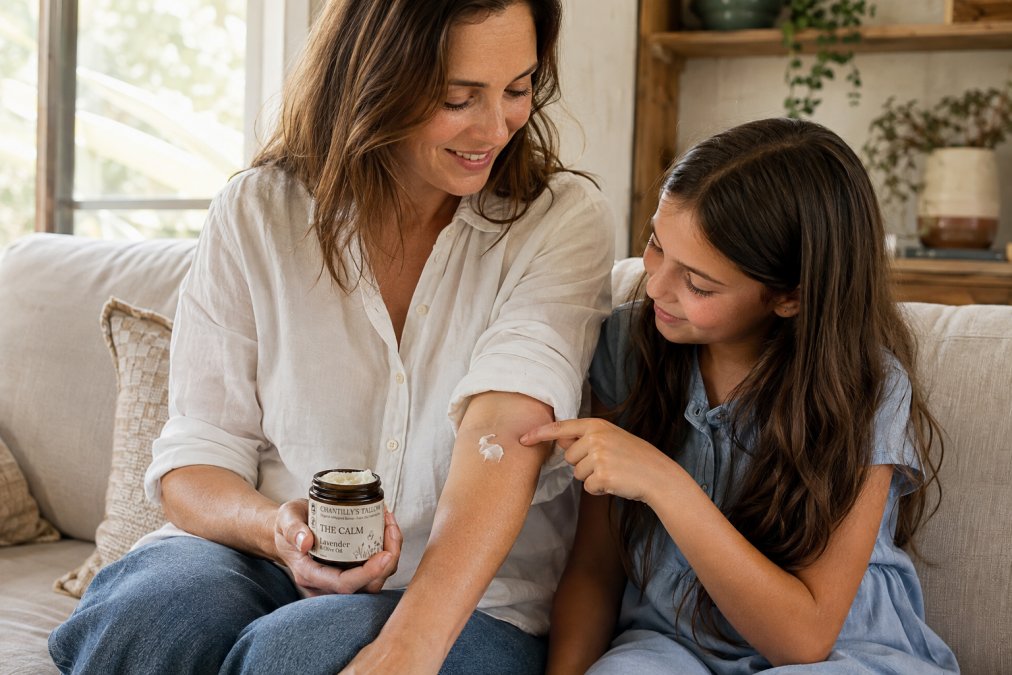
Why patch testing matters: Eczema-prone skin is reactive. A product that works beautifully for one person may trigger a flare in another. Patch testing identifies reactions before you apply the product to large areas, preventing unnecessary discomfort and potential barrier damage.
Allergic reactions to tallow: True allergy to tallow is rare but possible. Symptoms include immediate itching, hives, or swelling. More common is sensitivity to processing residues or contamination. High-quality, 100% grass-fed tallow from transparent suppliers minimises this risk. Chantilly's Tallow's direct farm-to-consumer approach eliminates middlemen and reduces the chance of contamination.
Reactions to plant-based oils: Jojoba, macadamia, and olive oil rarely cause true allergies but can trigger irritation if the skin barrier is severely compromised. Some people experience breakouts from certain oils, particularly if they're prone to fungal overgrowth. Patch testing reveals these sensitivities quickly.
Sourcing and Processing Transparency
When comparing tallow alternatives for eczema, sourcing and processing matter more than many people realise. The quality of the final product depends entirely on the quality of the source material and how it's processed.
Grass-fed vs grain-fed: 100% Grass-fed cattle produce tallow with a superior fatty acid profile. Grass-fed beef contains higher levels of omega-3 fatty acids, CLA, and other compounds that support skin health. Grain-fed tallow, by contrast, has higher omega-6 ratios and lower nutrient density. For eczema treatment, 100% grass-fed is worth the premium.
Rendering process: Tallow is rendered (melted and separated) from beef fat. Low-temperature, slow rendering preserves heat-sensitive vitamins and fatty acids. High-temperature industrial rendering maximises yield but damages nutrients. Ethical producers use gentle methods; mass-market producers prioritise speed and volume.
Transparency markers: Ask suppliers these questions:
- Are the cattle 100% grass-fed after weening?
- What temperature is used for rendering?
- Are any additives, preservatives, or fragrance used?
- Is the product tested for contaminants?
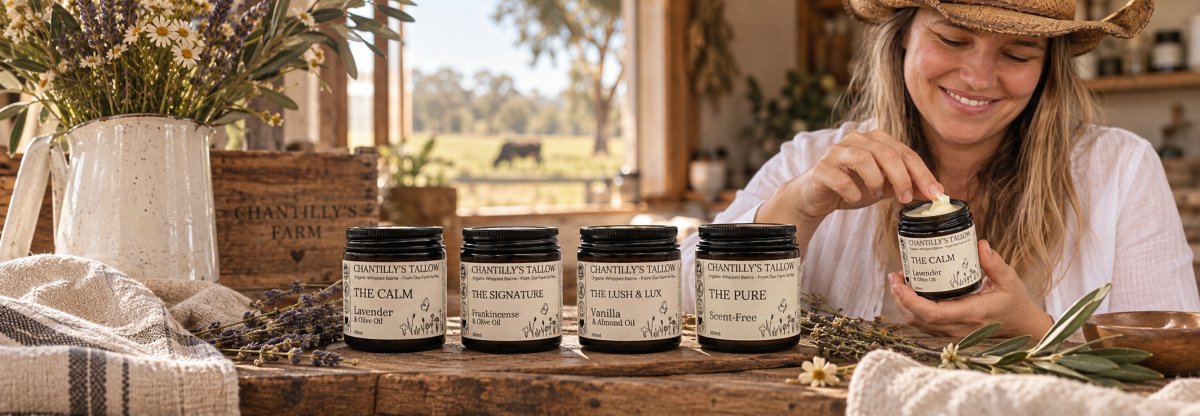
Chantilly's Tallow sources directly from its own farm, eliminating supply chain opacity. The cattle are 100% grass-fed and organically raised; rendering is done in small batches using low-temperature methods. This transparency allows customers to understand exactly what they're applying to their skin.
For plant-based oils, sourcing also matters. Cold-pressed oils retain more polyphenols and antioxidants than refined oils. Organic certification reduces pesticide residue risk. Reputable suppliers provide batch testing and traceability.
Which Alternative Suits Your Eczema?
Choosing between tallow and plant-based alternatives depends on your specific situation, skin sensitivity, and eczema severity.
Choose 100% Grass-fed tallow balm if:
- Your eczema is moderate to severe with significant barrier damage
- You need sustained, intensive hydration and occlusion
- You prefer a minimalist routine with fewer products
- You're willing to tolerate a heavier initial feel for deeper nourishment
- You want fat-soluble vitamins (A, D, E, K) as part of treatment
Chantilly's Tallow is an excellent choice here. The 100% grass-fed, small-batch formulation provides the comprehensive lipid profile and nutrient density that severely compromised skin needs. Direct farm-to-consumer sourcing ensures transparency and quality.
Choose plant-based oils if:
- Your eczema is mild or you're in a maintenance phase between flares
- You prefer lighter textures that absorb quickly
- You want faster absorption without prolonged surface heaviness
- You're specifically drawn to anti-inflammatory polyphenols (olive oil) or rapid sebum-mimicry (jojoba)
- You have oily or combination skin alongside eczema
Choose conventional therapeutic creams if:
- You want clinical evidence of efficacy
- Your dermatologist has recommended a specific product
- You need a formula tested specifically for your age group (infants, children, adults)
- You prefer pharmacy availability and professional guidance
- You want a product with proven barrier-repair ingredients like ceramides and niacinamide
A practical approach: Many people use a combination. A therapeutic cream with ceramides during flares, followed by tallow or plant oil for maintenance. A gentle cleanser (like Dermavive) paired with whichever moisturiser works best. This layered approach addresses both acute flares and long-term barrier health.
Eczema management is deeply personal. What works depends on your skin chemistry, the severity of your condition, and your tolerance for different textures and ingredients. Tallow alternatives for eczema range from other natural oils to clinically formulated creams, each with genuine benefits and genuine limitations.
If you're drawn to natural, nutrient-dense skincare with minimal ingredients, Chantilly's Tallow offers 100% grass-fed tallow balm formulated for skin barrier repair and healing. The direct farm-to-consumer model ensures transparency about sourcing and processing. For those seeking a natural option with exceptional moisture re-balancing and support for skin healing, tallow from ethically raised cattle represents a meaningful alternative to conventional treatments. Find Your Balm and start your barrier repair journey with a product designed to respect both your skin and the earth.
Frequently Asked Questions
What makes grass-fed tallow balm for eczema different from regular moisturisers?
Grass-fed tallow balm contains a fatty acid profile that closely mirrors the skin's natural lipid composition, making it highly bio-compatible. Unlike conventional creams that rely on synthetic emulsifiers, tallow provides both occlusive and emollient properties, supporting the skin barrier function and reducing transepidermal water loss more effectively than many plant-based alternatives.
How long does tallow balm shelf life typically last, and how should I store it?
Quality tallow balm shelf life extends 12-18 months when stored correctly. Keep your balm in a cool, dark place away from direct sunlight and heat, ideally below 28°C. Store in an airtight container to prevent oxidation. Avoid damp bathrooms; instead use a bedroom drawer or cupboard. If your balm develops an off smell or discoloration, discard it. Proper storage conditions preserve the fatty acids and prevent rancidity.
Is tallow safe for sensitive skin and eczema-prone individuals?
Tallow is generally safe for sensitive skin because it's hypoallergenic and free from synthetic preservatives and essential oils. However, individual reactions vary. Always perform a patch test first: apply a small amount to your inner forearm or behind your ear and wait 24-48 hours. Some people with severe allergies or specific sensitivities may experience irritation. If you have known beef allergies, consult a dermatologist before use.
Can I use tallow balm alongside my prescribed eczema treatments?
Tallow balm can complement prescribed treatments, but timing matters. Apply your medicated cream first, allow it to absorb fully, then layer tallow balm on top as an occlusive barrier. This approach supports skin barrier repair without interfering with medication absorption. Always discuss any new skincare addition with your dermatologist, particularly if you're using topical steroids or other active treatments.