 blog
Best Tallow for Sensitive Skin: A Natural Approach
Table of Contents
- Why Tallow Works for Sensitive Skin
- Grass-Fed Beef Tallow Benefits for Skin Barrier Health
- Natural Skincare for Sensitive Skin: What to Look For
- Frequently Asked Questions
Last Updated: September 18, 2026
Why Tallow Works for Sensitive Skin
Tallow for sensitive skin works because it mirrors your skin's own lipid structure. Your skin barrier is built from fatty acids, the same ones found in grass-fed beef tallow. When you apply tallow to compromised skin, there's no immune system confusion, no inflammatory response, no "what is this foreign substance?" reaction that triggers flare-ups.
Most skincare brands market active ingredients, peptides, retinol, niacinamide, but for sensitive skin, each active is another potential irritant, especially if it isn’t 100% naturally derived.
Tallow strips away that complexity by providing what your skin already recognises, which is why people with eczema, psoriasis, and chronic dermatitis often see relief where conventional products failed.
Grass-Fed Beef Tallow Benefits for Skin Barrier Health
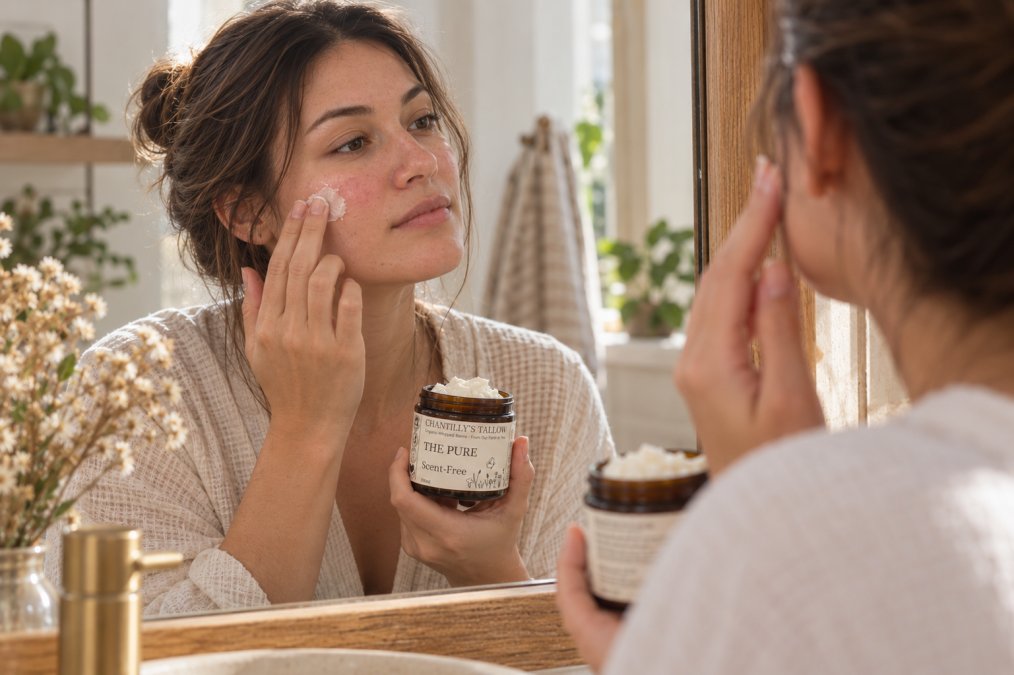
Grass-fed beef tallow contains conjugated linoleic acid (CLA) and oleic acid, which reduce transepidermal water loss, the primary culprit behind dry, irritated, sensitive skin.
Grain-fed tallow has a different fatty acid ratio; grass-fed tallow delivers anti-inflammatory fatty acids that calm active irritation, while grain-fed versions provide only basic moisture.
When your skin barrier is compromised, moisture escapes and irritants penetrate; tallow seals both problems by hydrating from within and creating a protective surface seal.
Natural Skincare for Sensitive Skin: What to Look For
When choosing tallow balm, prioritise sourcing transparency, ingredient simplicity, and formulation purity.
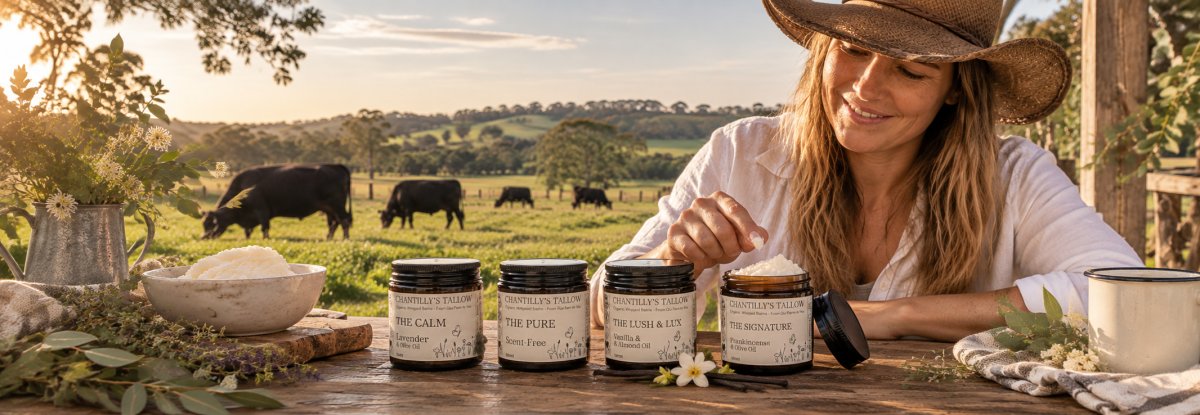
Sourcing transparency means tracing cattle back to the farm; Chantilly's Tallow sources directly from its own Gippsland property, eliminating middlemen and ensuring full control over feed and farming practices.
Ingredient simplicity matters for sensitive skin; look for fewer than five ingredients like jojoba oil, macadamia oil, and olive oil chosen for biocompatibility. Avoid fragrance, essential oils, or preservatives.
Formulation purity means no fillers, no emulsifiers, no synthetic stabilisers. A proper tallow balm feels whipped or creamy because of its natural composition, not because of added thickeners. Unscented formulations are non-negotiable for sensitive skin, even "natural" fragrance oils can trigger reactions.
When you're comparing options, ask one direct question: Can the maker tell you exactly where the tallow came from and what else is in the jar? If the answer is vague, move on. Sensitive skin deserves transparency, not marketing speak.
Frequently Asked Questions
Is tallow good for sensitive skin?
Yes. Grass-fed beef tallow is non-comedogenic and matches your skin's natural fatty acid profile, making it exceptionally well-suited for sensitive skin, eczema, and psoriasis. Its emollient properties repair the skin barrier without triggering irritation, unlike many synthetic moisturisers. Tallow is hypoallergenic when sourced from grass-fed, organically-raised cattle and kept free from fragrance and additives.
What should I look for when buying tallow for sensitive skin?
Prioritise grass-fed, organically-raised sources with transparent farming practices. Check that the tallow is rendered without chemicals and contains no fragrance, essential oils, or unnecessary additives. Look for products that specify their sourcing and farming methods. Patch test on a small area first, even with pure tallow, to ensure compatibility with your individual skin.
How does tallow balm shelf life affect its quality for sensitive skin?
Fresh tallow balm retains its bioavailable fatty acids and skin-barrier-supporting properties best within 12 months of opening when stored correctly. Keep your tallow in a cool, dark place below 28°C to prevent oxidation and rancidity. Proper storage maintains the integrity of the emollient and anti-inflammatory compounds that make tallow effective for sensitive skin conditions.
For chronic skin conditions like eczema and psoriasis, switching to tallow-based skincare from Chantilly's Tallow removes the irritant load that conventional products create. Our handcrafted balms use 100% grass-fed beef tallow with minimal, biocompatible ingredients, designed specifically to support your skin barrier without the guesswork. Explore how our Farm to Skin approach can transform your routine.